As California inches closer to the 2027 implementation date for Assembly Bill 351—the landmark legislation that legalizes Natural Organic Reduction (NOR)—the “green death” movement has hit a significant and unexpected roadblock. In early 2026, a phenomenon known as the “Zonal Burial Conflict” has emerged, pitting state-level environmental progress against local-level zoning autonomy. What was celebrated as a victory for eco-conscious citizens is now being picked apart by county boards, land-use attorneys, and local conservationists who are worried about the practical realities of turning humans into soil.
The Context: California’s Legislative Leap
The California Human Composting Law was originally passed with a clear mandate: provide a sustainable, carbon-neutral alternative to traditional burial and cremation. For decades, the funeral industry has relied on land-intensive cemeteries and energy-hungry crematoriums. Traditional burial often involves embalming fluids containing formaldehyde, which can leach into the groundwater, while cremation releases hundreds of pounds of CO2 per body into the atmosphere. Natural Organic Reduction promised to solve both issues by accelerating the natural decomposition process, resulting in roughly one cubic yard of nutrient-rich soil that could be used to restore forests or nourish private gardens.
However, the bill left a massive legal vacuum regarding where that soil could be placed. It assumed that the soil would be treated like any other compost or cremated remains. But as we see in 2026, local municipalities are beginning to argue that “human-derived soil” is a unique category that requires its own set of zoning restrictions.
Understanding the Zonal Burial Conflict
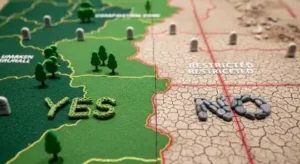 The “Zonal Burial Conflict” refers to the growing trend of California counties passing local ordinances that restrict the application of NOR soil to specific “permitted zones.” While the state says the process is legal, these counties are using their land-use powers to ensure that the soil isn’t spread on public lands, near waterways, or in certain residential areas. This has created a “postcode lottery” for those who wish to choose a green burial, where your final wishes may depend entirely on which side of a county line you reside.
Environmental Concerns and Water Quality
One of the primary arguments for the resistance is environmental safety—ironically, the very thing NOR was designed to champion. In areas like Northern California, particularly around the Feather River and local watersheds, officials are expressing concern about “nitrogen loading.” Human-derived soil is incredibly nutrient-dense. If hundreds of individuals were to have their remains spread in a single regional park, local officials fear the runoff could affect water quality and disrupt delicate aquatic ecosystems. This conflict highlights the need for rigorous scientific standards that balance the benefits of composting with the protection of local resources.
The Legal Battle: Preemption vs. Local Control
At the heart of the 2026 conflict is a classic legal struggle: State Preemption. Typically, state law overrides local law. However, California’s constitution gives cities and counties broad “police powers” to regulate land use. Attorneys for several Central Valley counties are currently arguing that the state cannot force a county to allow what they define as “unmarked burial sites” (the application of human soil) on land zoned for agriculture or public recreation.
This mirrors other legislative battles we’ve seen recently, such as the debate over SB 915 and autonomous vehicle oversight. In both cases, the state wants a unified standard to encourage innovation, while local communities want the right to say “not in my backyard.” The outcome of these “Zonal Burial” lawsuits will likely set a precedent for how all “Death Tech” is regulated moving forward.
Cultural and Psychological Barriers
Beyond the legal and environmental arguments lies a deeper, psychological resistance. Death remains a taboo subject, and the idea of “composting” a human being still faces significant cultural pushback from certain segments of the population. Local boards are often responding to “NIMBY” (Not In My Backyard) pressure from residents who are uncomfortable with the idea of public parks or neighboring forests effectively becoming “active” memorial sites without the traditional markers of a cemetery.
For the green death movement to succeed, it must overcome this “creepy factor.” Advocates argue that NOR soil is indistinguishable from high-quality forest mulch and is a far more dignified and “living” tribute than a cold marble headstone. Yet, as the 2026 ordinances show, the transition from traditional burial to “zonal” green burial is as much a cultural battle as it is a legal one.
The Role of Technology and Oversight
 How do we resolve the conflict? Many experts suggest that the answer lies in better tracking and certification. New 2026 startups are emerging to offer “Soil Custody Tracking,” using GPS and blockchain to verify exactly where NOR soil is applied, ensuring it meets local zonal requirements. This technology could provide the transparency local officials need to lift their bans.
If you are exploring alternatives while these local laws are being settled, it is worth looking into aquamation (alkaline hydrolysis). Aquamation has faced similar hurdles but has generally been more widely accepted because the final remains are a sterile powder, similar to cremated ashes, making them easier to manage under current zoning laws.
Impact on Future Planning and Estate Law
For Californians currently updating their end-of-life plans, the Zonal Burial Conflict adds a layer of complexity. You cannot simply assume your remains can be returned to your favorite hiking trail or local woodland. Estate attorneys are now advising clients to include “contingency disposition” clauses in their wills. If your primary choice (human composting) is restricted in your county by 2027, you need a secondary plan that complies with local ordinances.
- Private Land Usage: Currently, most local resistance is focused on public and agricultural lands. Applying the soil to private residential property remains the most legally “safe” option.
- Cemetery Integration: Some traditional cemeteries are creating “Green Zones” to accommodate NOR soil, providing a compromise for those who want a natural return within a legally protected area.
- Inter-County Transport: It is possible to have the NOR process done in one county and the soil transported to another that has more favorable “Zonal” laws.
Conclusion: Navigating the Earthly Red Tape
The road to 2027 was always going to be challenging, but the Zonal Burial Conflict of 2026 has shown that the “green death” revolution must be fought at the local level, county by county. The California Human Composting Law is a giant leap forward, but its success depends on the willingness of local communities to redefine their relationship with the land and the departed. As we continue to monitor these legislative shifts, one thing is certain: the conversation about how we leave this world is just as important as how we lived in it.
For more updates on the intersection of technology, law, and legacy, keep following our Death Tech series. We will continue to provide deep-dive analysis on the trends shaping our digital and physical afterlives.