As we navigate the landscape of 2026, the “Death Tech” industry is witnessing a profound bifurcation. On one hand, we are obsessed with the digital preservation of the mind through Blockchained Deathbots. On the other, a quiet, organic revolution is taking place beneath our feet. Human Composting, scientifically known as Natural Organic Reduction (NOR), has transitioned from a niche Pacific Northwest experiment into a global urban necessity. This is no longer just a “hippie” alternative; it is a sophisticated, data-driven solution to a planet that is quite literally running out of room for the dead.
The Science of “Natural Organic Reduction” (NOR)
To understand the rise of human composting in 2026, one must first understand the mechanical and biological elegance of the process. Unlike traditional burial, which seeks to halt decay through toxic embalming, or cremation, which uses fossil fuels to incinerate biological matter at 1,800°F, NOR works with the Earth’s natural microbes. The process takes place in a climate-controlled “reduction vessel.”
The body is laid on a bed of alfalfa, straw, and woodchips. Over the course of 45 to 60 days, the vessel is aerated, creating the perfect thermophilic environment for beneficial bacteria to break down everything—including bones and teeth—into nutrient-rich soil. By the end of the cycle, what remains is approximately one cubic yard of soil, enough to fill several large planter boxes or nourish a young sapling. This is the ultimate “closed-loop” system, proving that in 2026, the most advanced technology is often the one that mimics nature most accurately.
The 2026 Urban Burial Crisis
Why has human composting surged in popularity this year? The answer is geographical. In major metropolitan hubs like New York, London, and Tokyo, traditional cemetery space has reached a breaking point. Prices for a single plot in historic cemeteries have skyrocketed, often exceeding $25,000. For the modern urbanite, traditional burial is becoming an inaccessible luxury.
Human composting facilities, often called “Soil Sanctuaries,” require a fraction of the footprint. A vertical NOR facility can process hundreds of individuals per year in the same space a single traditional grave occupies. This efficiency is why city planners in 2026 are fast-tracking the legalization of NOR, viewing it as a critical infrastructure update for a sustainable city. If you are currently drafting a digital will, it is increasingly important to specify your physical “disposition” to ensure your family isn’t left scrambling for an unavailable or overpriced plot.
Environmental Impact: The Carbon Math
 The environmental cost of death is often overlooked. A single cremation releases about 530 pounds of CO2 into the atmosphere—roughly the equivalent of a 500-mile car trip. Traditional burials are even worse, burying millions of gallons of formaldehyde and tons of steel and concrete every year. In contrast, human composting sequesters carbon. The process captures the carbon in the body and locks it into the soil, preventing it from entering the atmosphere. It is estimated that choosing NOR over traditional methods saves one metric ton of carbon per person. In a world increasingly defined by climate consciousness, “dying green” has become a final act of environmental activism.
The Legal and Ethical Landscape of 2026
The legal journey of human composting has been arduous. As of April 2026, over 20 U.S. states have legalized the process, but the conversation has moved beyond mere legality and into the realm of “Post-Mortem Privacy.” The 2026 “Bio-Legacy Act” ensures that the soil produced from NOR is treated with the same legal sanctity as cremated remains. This means that corporations cannot “harvest” this soil for commercial agricultural use without explicit consent in a digital inheritance plan.
Ethically, the movement has faced pushback from certain religious institutions that view the “commingling” of soil as a violation of the “body as a temple.” However, a new wave of “Eco-Spirituality” has emerged in 2026, suggesting that returning to the earth is the highest form of spiritual humility. This cultural shift is visible in the growing number of “Memorial Forests” where families visit a tree rather than a tombstone.
Economic Reality: What Does it Cost?
In 2026, the average cost of a funeral has become a significant burden. Human composting offers a mid-tier financial solution. While direct cremation remains the cheapest at roughly $2,000, human composting typically ranges from $5,000 to $7,000. This fee usually includes the transportation, the reduction process, and the filing of all legal death certificates. When compared to the $12,000+ cost of a traditional casket funeral, NOR is an economically sound choice for the middle class, providing “luxury” ecological status without the bankruptcy-inducing price tag of a cemetery plot.
The “Digital Seedling” Connection
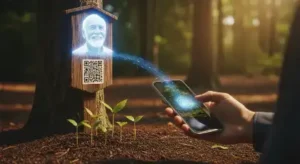 Perhaps the most fascinating development on newdeaths.com is the intersection of the physical and the digital. High-end NOR facilities are now integrating “Digital Seedlings.” When a family plants a tree with the composted soil of a loved one, a discreet, weather-proof NFC chip or QR code is embedded in the memorial marker. Visitors can tap their phones to instantly view a curated legacy gallery or even interact with a “Grief Bot” version of the deceased.
This creates a powerful psychological bridge. The physical body has become the forest, while the digital persona continues to provide comfort and guidance. This synergy is the hallmark of “Death Tech” in 2026—a holistic approach to loss that acknowledges both our biological roots and our digital branches.
Conclusion: Your Final Footprint
As we look toward the end of 2026, the question of “What happens when I die?” has more answers than ever before. You can live on as an immutable piece of code on a blockchain, or you can become the nutrients that sustain a neighborhood park. Human composting offers a return to the oldest truth we know: Ashes to ashes, dust to dust, and soil to life.
If you are ready to start planning, begin by auditing your current assets and documenting your wishes. Whether you choose the high-tech path of the BDB or the organic path of the forest, the most important thing is that you—and not a corporation—control your final footprint. Stay tuned to newdeaths.com as we continue to track the legal, ethical, and technological shifts in the way we say goodbye.