Funeral home safety and oversight matter because choosing a funeral provider requires considerable trust. Families hand over responsibility for the care of a loved one, often while making unfamiliar decisions under emotional pressure. Price, location, and recommendations matter, but so do less visible questions: Is the establishment properly registered? Who is responsible for care? How are remains identified and tracked? What happens when regulators discover a problem?
Funeral home safety and oversight in 2026 have become especially timely questions. Colorado enacted further changes to its mortuary laws in June, while an October briefing from the United Kingdom’s House of Commons examined calls for stronger regulation of funeral directors. The developments are not evidence that every provider is unsafe. They show why families increasingly want clear standards and ways to verify them.
What Does Funeral Home Oversight Mean?
Oversight is the system of licensing, establishment registration, rules, inspections, enforcement, and complaints that applies to deathcare providers. It can address the safe storage and identification of remains, professional qualifications, transportation, cremation authorization, business records, and consumer disclosures.
There is no single international regulator. Even within the United States, funeral establishment rules vary by state. A provider may need a facility registration, individual professional licenses, a crematory permit, or some combination depending on the services offered and the local law. For that reason, a good consumer question is not simply whether a business is licensed, but which licenses or registrations are required for the particular services it will provide.
Why Colorado’s 2026 Reforms Are Getting Attention
Colorado has been making substantial changes to funeral regulation after serious failures in the care of deceased people. The state’s official page for House Bill 26-1258 confirms that it became law on June 4, 2026. The act amends the Mortuary Science Code, professional licensing and establishment requirements, regulator authority, aspects of death-certificate processing, and criminal provisions concerning abuse of a corpse.
The enacted law lists an August 12, 2026 effective date for the act, while particular provisions, including the higher criminal penalty described in the legislative summary, apply from January 1, 2027. This distinction matters. A headline about a newly signed law does not mean every provision became enforceable on the signing date. Families or funeral operators seeking the precise requirements should consult the enacted text and current regulator guidance.
Colorado’s changes also build on earlier reforms. Coverage of the state’s strengthened inspection system has drawn attention to refrigeration, recordkeeping, and chain-of-custody failures. These are operational standards that consumers may never see in an ordinary arrangement room, yet they are central to respectful care.
Why the United Kingdom Is Debating Regulation
Other jurisdictions are raising similar questions in different legal systems. The House of Commons Library’s October 5, 2026 briefing explains that the regulatory arrangements for funeral directors differ across the UK. Scotland has a more specific regulatory framework, while England, Wales, and Northern Ireland do not have the same bespoke regime for funeral directors.
The briefing discusses calls for mandatory oversight following failures in the treatment of human remains. That debate concerns UK law and should not be confused with US state licensing. Together, however, the examples illustrate a broad public concern: families need confidence that care standards are independently checked, not simply promised.
How Families Can Check a Funeral Provider
Before signing an agreement, find the state or local government agency responsible for funeral establishments, crematories, or mortuary professionals. Many regulators maintain online license lookups, complaint instructions, or disciplinary information. Confirm the business name, address, and professional credentials match the provider you are using.
If an online record is difficult to understand, call the relevant licensing agency rather than relying on a screenshot supplied by the business. A license lookup is useful, but it is not a guarantee of future performance. It is one part of a wider decision.
The Funeral Consumers Alliance guide to choosing a funeral home recommends asking clear questions and researching providers before making a commitment. Families can also ask about who performs transfers, which facility handles refrigeration, and whether cremation takes place on-site or through a separate operator.
Ask About Identification and Chain of Custody
Chain of custody means the documented process used to maintain identification and accountability as remains move from one responsible person or location to another. It is especially important if the body is transported between a hospital, funeral home, crematory, or cemetery.
A family may reasonably ask how identity is confirmed at transfer, how it is maintained during storage, what authorization is needed before cremation, and which records are kept. The provider should be able to explain its process in plain language without revealing another family’s private information.
As a related consumer issue, NewDeaths has explained how confusing funeral terms can be in Funeral Language in 2026. Understanding the vocabulary makes safety questions easier to ask.
Storage and Facility Standards Matter
Funeral care includes physical facilities, equipment, staff training, and records. Depending on the jurisdiction and the services offered, regulations may address refrigeration, sanitation, temporary holding, crematory operations, and safe transportation.
These matters usually are not visible to the public. Families should not assume a polished showroom proves that behind-the-scenes systems are compliant. Conversely, they should not assume that a modest facility is unsafe. Ask how the provider complies with applicable requirements, and verify relevant licensing information independently. For example, an inspection program may review recordkeeping and refrigeration while the FTC separately monitors compliance with price-disclosure requirements.
Transparency and Safety Are Connected, but Different
Price transparency protects a family’s ability to compare goods and services. Operational oversight deals with how those services are delivered. Both matter, but one cannot substitute for the other.
The FTC Funeral Rule gives US consumers important pricing and purchasing protections, such as itemized price information and the ability to choose individual goods and services, subject to limited exceptions. The rule itself is not a nationwide inspection code for funeral-care facilities.
The FTC funeral pricing checklist can also help families compare itemized charges. For pricing questions, NewDeaths offers a separate guide to funeral price transparency. Read that alongside state licensing information rather than treating a low quoted price as a measure of care quality.
Warning Signs That Deserve Follow-Up
Unanswered questions do not automatically establish misconduct. Still, some responses justify additional verification, especially if a provider refuses to identify its legal business name, cannot explain who handles the remains, gives inconsistent answers about location, or will not provide the disclosures required by applicable law.
Another concern is pressure to sign immediately without a chance to read the arrangement documents. Families can ask for a written explanation, request a second professional contact, or compare another provider.
The Colorado Freedom of Information Coalition has documented the importance of public access to inspection records. The availability of records and any restrictions vary by jurisdiction, so check the regulator’s current public-records process.

How to Raise a Concern or Complaint
Start by recording factual details: dates, names, what was promised, what occurred, and copies of relevant documents. Seek clarification from the provider when appropriate, but contact the licensing or consumer-protection agency if a matter involves suspected violations or unresolved concerns.
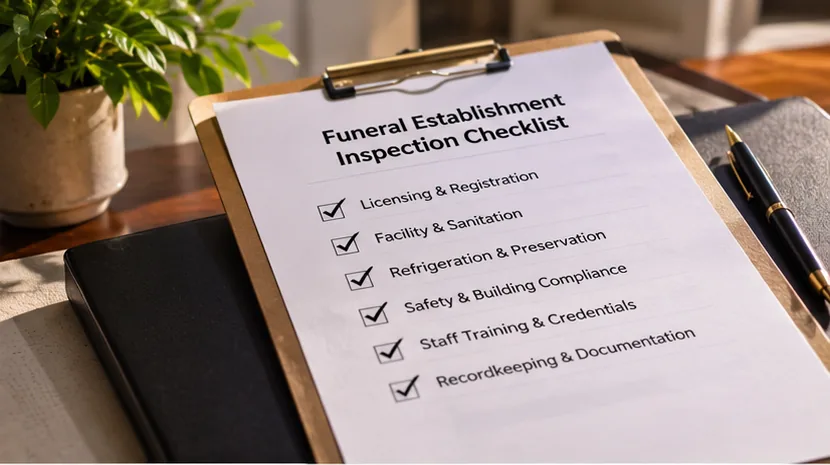
A Practical Checklist Before Making Arrangements
- Confirm the provider’s legal name, business address, and required registrations.
- Check relevant individual licenses and any publicly available disciplinary records.
- Ask who handles transfers, storage, cremation, and final release.
- Request required itemized price information and a written agreement.
- Discuss authorization, identification, and chain-of-custody procedures.
- Keep copies of the documents and share them with a trusted relative.
No checklist can guarantee that a provider will never make a mistake. It can, however, help families ask more informed questions and establish clear expectations before services begin.
Conclusion
Funeral home safety and oversight in 2026 is a story about trust, accountability, and practical consumer information. Colorado’s new law and the UK’s regulatory debate show that oversight is changing, although legal requirements are highly jurisdiction-specific.
Families do not need to become regulatory experts. They can protect their interests by verifying the provider’s status, understanding who performs each service, asking about documentation and care procedures, and retaining written records. Compassion matters greatly in funeral service, but transparent and accountable operations matter too.