
For generations, newspaper obituary pages served an important community function. Families announced a death, shared funeral information, summarized a life, and gave former neighbors, coworkers, classmates, and friends an opportunity to learn that someone had passed away.
The obituary has not lost that purpose. What has changed is where people encounter it.
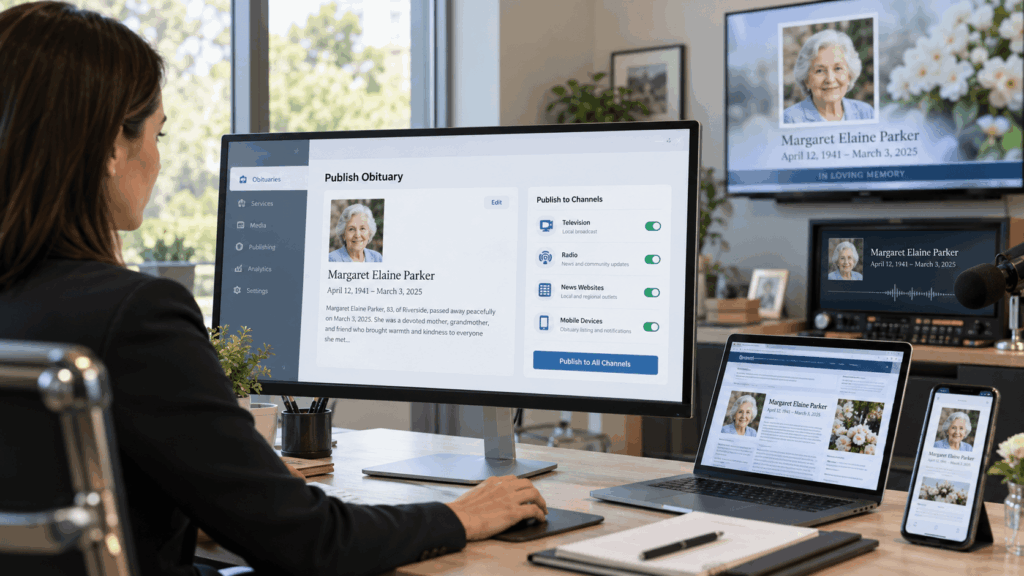
In 2026, a new form of digital obituary distribution is expanding death notices beyond newspaper pages and individual funeral-home websites. Memorial announcements can now move through local television, radio, news websites, streaming channels, social platforms, and other digital community spaces.
The trend gained additional attention when the National Funeral Directors Association named Chptr’s Local Media Distribution Network a finalist for its 2026 Innovation Award.
The Obituary’s Purpose Has Stayed Remarkably Consistent
Despite changes in technology, an obituary still performs several familiar jobs. It tells the community that a death occurred, provides service details, records important parts of a life, and helps people understand how they can support a grieving family.
NewDeaths examined the broader shift from print to online remembrance in Emerging Trends in Obituaries and Memorial Notices. The next phase is not simply publishing an obituary online. It is distributing that obituary to multiple places where community members already spend their time.
That distinction matters because an obituary posted on one website still depends on someone knowing where to look.
Why a Funeral Home Website May Not Reach Everyone
Funeral-home websites remain important sources of service details and memorial information. But they mainly reach people who already know that someone died, know which funeral home is handling the arrangements, or encounter a shared link.
A former coworker, distant relative, old neighbor, teacher, church member, or school friend may never search the correct funeral-home website.
Multi-platform distribution attempts to solve that discovery problem by bringing the announcement into existing community information channels.
Pew Research Center’s 2026 local news data illustrates just how fragmented those channels have become. Americans continue to obtain local information from television and radio, but substantial shares also use online news sources, social media, newsletters, community groups, and other digital platforms.
Television Obituaries Are Returning in a New Form
Televised death announcements are not an entirely new idea. Local television has long carried community information, particularly in smaller markets.
What is new is the ability to transform obituary information already collected by a funeral home into a professionally formatted broadcast announcement through a digital workflow.
Chptr’s broadcast memorial platform, for example, converts obituary information into local television and radio announcements while also connecting viewers back to the funeral home’s online obituary.
Rather than choosing between traditional media and digital memorials, the model links them together.
Radio Is Becoming Part of Digital Obituary Distribution
Radio remains an important community medium, particularly during commuting hours and in local markets where stations maintain strong regional audiences.
In 2026, obituary distribution expanded further into audio. Tribute Technology’s expanded Chptr integration added radio distribution to an existing television-obituary workflow.
According to the companies involved, funeral homes can now distribute audio obituary announcements without rebuilding the information from scratch in a separate system.
This may be particularly valuable for older community members who still rely heavily on broadcast media, while younger relatives may encounter the same memorial information online.
One Obituary Can Now Travel Across Multiple Channels
The most important technological change may be workflow rather than format.
Historically, a family or funeral director might need to contact a newspaper, submit information to a funeral-home website, create social posts, send details to community groups, and communicate separately with broadcasters.
Modern distribution systems can use one set of obituary information to create several versions for different channels.
The Tribute Technology and Chptr integration made broadcast memorial capabilities available through a platform used by thousands of funeral homes, illustrating how obituary distribution can become part of an existing digital workflow rather than an entirely separate task.
This trend connects naturally with NewDeaths’ coverage of AI funeral assistants and digital funeral planning, where technology is increasingly used to reduce administrative work while preserving human oversight.
Why Local Media Still Matters
It may seem surprising that television and radio are part of a digital-obituary trend, but local media still reaches substantial audiences.
Pew’s 2026 local news research found that local television remains one of the most widely used sources of community information, while radio also retains a meaningful audience. At the same time, many people now reach those traditional outlets through websites, apps, emails, or social media rather than only through a television set or radio receiver.
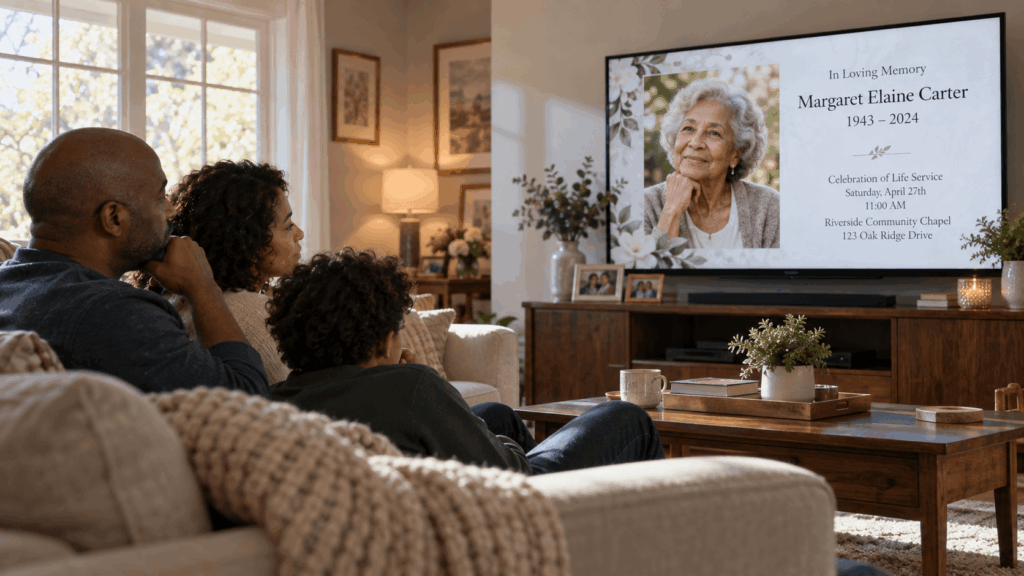
This creates a hybrid environment. A memorial announcement produced for a local station may be discovered on television, the station’s website, a phone, a social feed, or a shared link.
The Pew News Platform Fact Sheet likewise shows that digital devices are now the most common pathway through which American adults encounter news generally.
Digital Distribution Can Help More People Attend Services
One practical purpose of an obituary is letting people know when and where a funeral, visitation, memorial service, or celebration of life will occur.
Broader distribution may reach people who would otherwise hear about the death only after the service had already taken place.
This is especially relevant in communities where social networks overlap across workplaces, schools, churches, clubs, sports organizations, and neighborhoods.
NewDeaths’ guide to publishing obituaries online explains how digital notices already make memorial information easier to access across geographic boundaries. Broadcast and local-media distribution extends that principle into community discovery.
Modern Obituaries Can Contain More Than Text
Traditional newspaper space often encouraged concise obituary writing. Digital formats are far less constrained.
Families can now combine:
- Portrait photographs
- Longer life stories
- Memorial videos
- Recorded narration
- Funeral and visitation details
- Online guestbooks
- Donation information
- Livestream links
A short television or radio announcement may act as the entry point, while the full online obituary becomes the deeper memorial archive.
This model also connects with NewDeaths’ article on digital time capsules after death, which explores how modern families are preserving multimedia memories beyond conventional written records.
Families Still Need Control Over What Is Shared
Greater distribution also makes privacy more important.
Not every family wants a death announcement spread across numerous channels. Some may prefer a private service or limited notice.
Families should understand:
- Which platforms will receive the obituary
- Which photographs will be shown
- Whether exact service details will be public
- How long online copies will remain available
- Whether content can be corrected or removed
Modern obituary technology should expand options, not remove family control.
Broadcast Obituaries Do Not Replace Newspapers
The shift toward multi-platform memorial distribution does not mean newspaper obituaries are obsolete.
Print remains meaningful to many families, particularly when a local paper has historic community importance. Some families save physical clippings for decades.
Instead, obituary publishing is becoming layered. The same family may choose a newspaper notice, funeral-home page, local television announcement, radio notice, memorial video, and social-media post.
The result is less about replacing one medium and more about reaching different generations in the places where they already receive information.
The Future of the Community Obituary
The obituary is evolving from a single publication into a connected piece of community information.
NFDA’s recognition of multi-platform obituary distribution as a 2026 funeral-service innovation suggests that the industry sees broader community reach as an important part of future memorialization.
At the same time, the basic goal remains remarkably traditional: make sure the people who knew someone have an opportunity to learn about the death, remember the life, attend the service, and support the family.
Technology simply gives that announcement more paths to travel.
Conclusion
Digital obituary distribution in 2026 is moving remembrance beyond the boundaries of newspapers and individual funeral-home websites. Local television, radio, station websites, streaming channels, mobile devices, and social platforms are becoming connected parts of the memorial communication network.
For families, broader distribution may mean fewer people learn about a death too late. For communities, it may restore some of the shared awareness once provided by a single local newspaper obituary page.
The obituary itself is not disappearing. It is becoming easier for the story to find the people who need to see it.