
Throughout history, people have searched for ways to leave something meaningful behind. Letters, photographs, journals, and family heirlooms have allowed generations to stay connected with those who came before them.
Today, technology is creating a new form of remembrance: digital time capsules. These online collections allow people to preserve videos, voice recordings, photographs, personal messages, and stories that can be shared with loved ones in the future.
Digital time capsules are becoming part of a larger movement toward digital legacy planning, where people think beyond traditional assets and consider how their memories, experiences, and personal stories can continue after death.
Modern digital capsule platforms allow users to create collections that may be delivered at a chosen future date or after a specific event, such as a milestone birthday, anniversary, or the person’s passing.
What Is a Digital Time Capsule?
A digital time capsule is a collection of digital materials created today and intended to be accessed in the future. Unlike traditional physical time capsules, digital versions can include multimedia content such as videos, audio recordings, photographs, and written messages.
A person may create a digital time capsule to:
- Leave messages for children or grandchildren
- Preserve personal stories
- Share life lessons and memories
- Create a future memorial archive
- Provide comfort after death
Digital time capsules are different from ordinary cloud storage because they are designed around future delivery, preservation, and legacy planning rather than simple file storage.
Why People Create Digital Time Capsules Before Death
Many people want to remain connected with their families even after they are gone. While traditional estate planning focuses on property and financial assets, digital time capsules focus on emotional and personal legacy.
A legal document may explain who receives a home or financial account, but it cannot capture someone’s voice, personality, memories, or personal advice.
A recorded message from a parent, grandparent, or loved one can preserve details that might otherwise disappear over time.
This connects with NewDeaths topics about digital legacy planning, AI remembrance, and modern approaches to preserving memories.

What Can Be Included in a Digital Time Capsule?
One of the advantages of digital time capsules is the variety of content they can preserve.
Video Messages
Video allows people to preserve facial expressions, voice, and personality. A short message recorded today may become a meaningful connection for future family members.
Voice Recordings
Many families say that hearing a loved one’s voice is one of the most powerful reminders after a death. Audio messages can preserve stories, advice, laughter, and personal memories.
Photographs and Family History
Digital capsules can store photographs with explanations about important moments, locations, and family traditions.
Personal Letters
Written messages can provide encouragement, advice, or reflections about life experiences.
Digital legacy experts recommend including context with photos and recordings because future generations may not understand the meaning behind an image without additional information.
Digital Time Capsules and Death Planning
Digital time capsules are increasingly becoming part of broader end-of-life planning. Instead of only deciding what happens to possessions, people are also considering what happens to their digital identity and memories.
Modern digital estate planning may include:
- Online account instructions
- Cloud storage information
- Family photographs
- Personal messages
- Future delivery instructions
Research on post-mortem digital data shows that people increasingly want control over how their information is handled after death and who can access their digital legacy.
The Difference Between Digital Time Capsules and AI Afterlife Technology
Digital time capsules are different from AI afterlife avatars or digital replicas.
A time capsule preserves authentic materials created by a person while they are alive. It does not attempt to recreate their personality or generate new conversations.
AI afterlife systems, which NewDeaths has previously covered, use artificial intelligence to create interactive digital representations based on available data.
Digital time capsules focus on preserving genuine memories, while AI afterlife technology focuses on creating new forms of interaction.
How Digital Time Capsules Can Support Grief
Grief often involves wanting one more conversation, one more story, or one more reminder of someone who has passed away.
Digital time capsules provide another way for people to feel connected through authentic messages created before death.
A parent may leave a message for a child graduating years later. A grandparent may record family stories for future generations. A person may leave encouragement for loved ones during difficult moments.
Unlike AI-generated recreations, these messages preserve the person’s actual words, voice, and experiences.
Privacy and Security Challenges
Because digital time capsules often contain deeply personal information, security is an important consideration.
Families should consider:
- Who can access the capsule
- How information is encrypted
- How long files will be stored
- Who controls delivery instructions
- Whether recipients should know a capsule exists
Digital legacy researchers have highlighted ongoing challenges involving privacy, security, and access control for information that remains after death.
The Role of Technology Companies in Digital Legacy
As digital memories become more important, technology companies are developing tools to help people manage their future information.
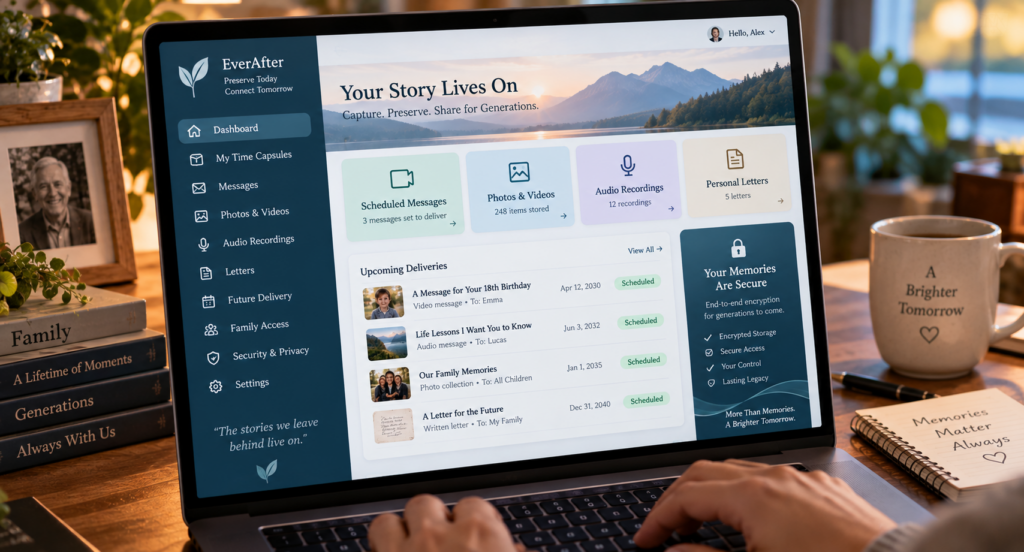
Platforms may provide features such as:
- Scheduled message delivery
- Encrypted storage
- Trusted contact access
- Digital archive organization
- Legacy planning tools
Technology companies are also facing questions about responsibility, privacy, and how digital memories should be managed after someone dies.
The Future of Digital Time Capsules
Future digital time capsules may become more advanced through artificial intelligence, improved storage technology, and personalized delivery systems.
Possible developments include:
- AI-assisted memory organization
- Interactive family history archives
- Virtual memory rooms
- Advanced voice and video preservation
- Integration with digital estate plans
However, the most meaningful part of a digital time capsule will likely remain the same: authentic human stories.
Creating a Meaningful Digital Legacy
A digital time capsule does not need to contain thousands of files. Often, the most meaningful messages are simple.
A short video explaining family traditions, a recorded story from childhood, or a personal message of love may become priceless for future generations.
The goal is not simply preserving information. It is preserving connection.
Conclusion
Digital time capsules after death represent a new chapter in how people think about legacy and remembrance. By combining technology with personal storytelling, these tools allow individuals to leave behind messages that can continue reaching loved ones long into the future.
As digital legacy planning becomes more common, future generations may inherit not only possessions but also voices, stories, and memories from those who came before them.