Funerals are becoming less defined by a single traditional format and more focused on telling the story of the person who died. In 2026, one of the clearest deathcare trends is the continued growth of the personalized celebration of life — a service built around memories, relationships, hobbies, music, meaningful objects, and the personality of the individual being remembered.
This does not mean traditional funerals are disappearing. Many families still value religious services, viewings, casketed burial, cemetery rituals, and established cultural customs. What is changing is the expectation that even traditional services can feel more personal.
Recent research from the National Funeral Directors Association shows that families increasingly want convenience, personalization, digital access, and professional guidance. NFDA has also reported that more consumers are attending funerals and memorials in nontraditional locations. These changes are creating a broader range of possibilities for how a life can be honored.
What Is a Personalized Celebration of Life?
A celebration of life is a memorial gathering centered on the identity and experiences of the person who died. It may take place before or after burial or cremation, and it can be religious, secular, formal, informal, or somewhere in between.
Personalization may include favorite music, photographs, hobbies, stories, colors, foods, career achievements, community involvement, sports interests, travel memories, or family traditions.
Instead of following a fixed template, families can ask a different question: What would make this gathering feel unmistakably connected to this person?
That question is increasingly influencing modern funeral planning. NFDA’s new Remembering A Life Award, introduced in 2026, specifically recognizes funeral professionals who create meaningful and highly personalized services that reflect a person’s life, interests, traditions, and relationships.
Why Personalization Matters to Families
A funeral serves several purposes at once. It acknowledges a death, brings people together, gives mourners an opportunity to say goodbye, and creates a shared record of someone’s life.
Personalization can make those functions feel more immediate. A generic ceremony may acknowledge that someone died. A personalized ceremony can remind guests how that person lived.
A gardener might be remembered through arrangements made with flowers from a home garden. A musician’s service may feature songs they performed or loved. A teacher’s memorial might include letters from former students. A sports enthusiast may be honored with memorabilia, photographs, or stories from years of attending games.
These details can turn objects into prompts for conversation. Guests may see a photograph, book, instrument, uniform, recipe, or piece of artwork and immediately remember a story.
Celebrations of Life Are Moving Beyond Funeral Homes
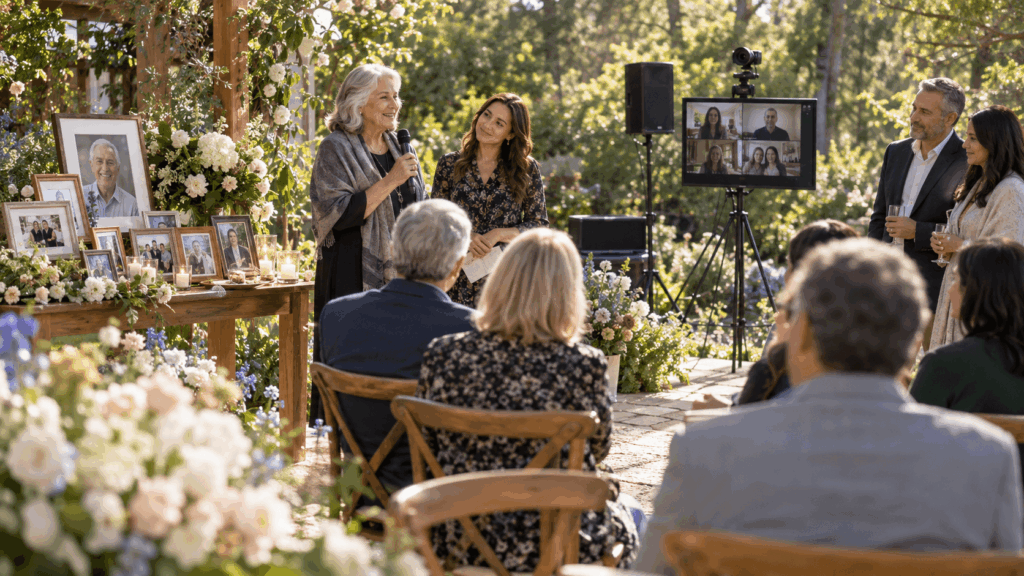
Another major change is location. Families are increasingly considering venues outside the traditional funeral chapel.
Possible locations include:
- Gardens and parks
- Restaurants and event spaces
- Community halls
- Family homes
- Beaches or outdoor gathering areas
- Places connected to a person’s hobbies or career
NFDA research indicates that nontraditional funeral and memorial locations have become familiar to many consumers. NFDA’s current industry statistics report that a majority of surveyed consumers have attended a funeral at a nontraditional location.
Choosing a different venue does not necessarily make a memorial less formal or meaningful. It simply allows the setting to become another part of the story.
Traditional Funerals Can Still Be Highly Personal
Personalization and tradition are not opposites.
A family may choose a church funeral, a traditional viewing, or a cemetery burial while still incorporating meaningful elements throughout the service. Photographs can line an entrance. A eulogy can focus on personal stories rather than a chronological biography. Favorite music can be played before or after religious selections.
This is especially relevant given recent generational research. NewDeaths has already explored how Gen Z is showing unexpected interest in traditional burial and funeral rituals. The emerging picture is not that younger adults are simply replacing traditional funerals. Instead, many appear interested in combining familiar rituals with greater personalization.
Memory Tables Are Becoming Storytelling Spaces
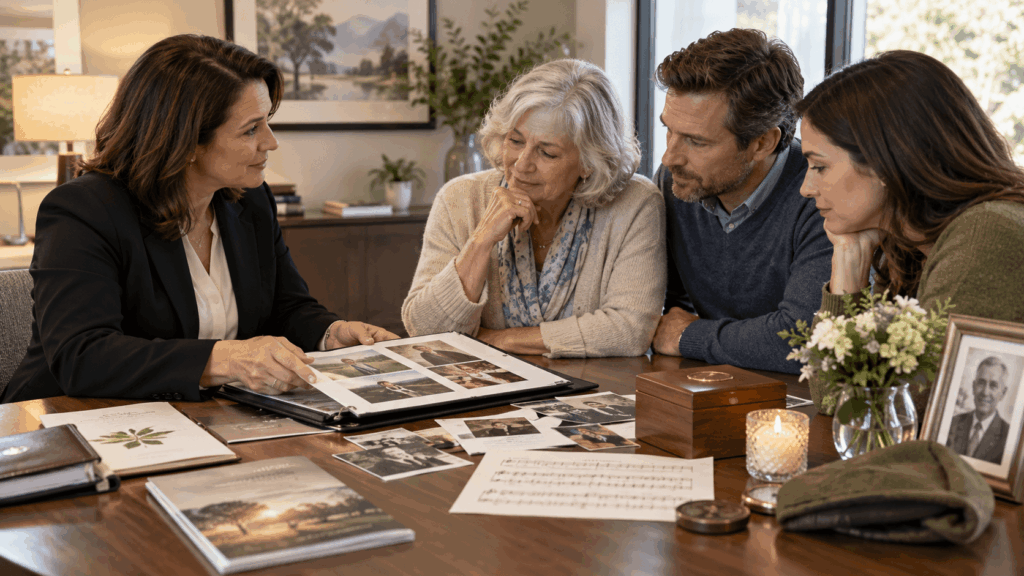
One of the simplest ways to personalize a memorial is through a memory table or life-story display.
Rather than using only a framed portrait, families can create a collection of objects that represent different parts of a person’s life. These might include:
- Childhood and family photographs
- Military or professional items
- Favorite books
- Crafts or artwork
- Sports equipment
- Travel souvenirs
- Recipes or handwritten notes
- Awards and certificates
The goal is not to display everything someone owned. A smaller selection of recognizable objects can tell a much stronger story.
Technology Is Adding New Layers to Memorialization
Digital technology has also become part of personalized remembrance. Families can create video tributes, digital guestbooks, online photo galleries, livestreams, memorial websites, and interactive archives.
NewDeaths has covered this shift through articles about virtual memorial services, connected memorials and smart cemeteries, and digital time capsules.
These tools are especially useful for families spread across different cities or countries. A relative who cannot travel may still watch a service, submit a memory, upload photographs, or participate through video.
NFDA’s consumer research on digital funeral planning shows that families are becoming more comfortable using online tools, although many still value guidance from funeral professionals.
Music, Food, and Shared Activities Can Become Part of the Tribute
A personalized memorial does not need to consist entirely of speeches.
Families may invite guests to listen to a playlist, share a favorite meal, write memories on cards, contribute photographs, light candles, plant flowers, or participate in an activity connected to the deceased.
Some services are deliberately designed to feel like gatherings the deceased would have enjoyed. A family might hold a backyard meal, organize a motorcycle procession, gather at a favorite fishing location, or incorporate a person’s cultural traditions into food and music.
The key is intention. Personalization works best when each element has a genuine connection to the person being remembered rather than being included simply because it is trendy.
Funeral Celebrants Are Part of the Personalization Trend
Families who do not want a strictly religious service may work with a funeral celebrant or another officiant who specializes in telling life stories.
Celebrants often meet with families, collect memories, identify important themes, and create ceremonies that reflect a person’s character and relationships.
NFDA’s global study of funeral preferences found that funerals remain meaningful across cultures, even though specific practices vary widely. This reinforces an important point: personalization does not eliminate ritual. It adapts ritual to the people involved.
Personalization Does Not Have to Be Expensive
Some of the most meaningful memorial details cost very little.
Displaying photographs, asking relatives to contribute stories, playing a personal playlist, sharing a favorite recipe, or placing meaningful objects near a guestbook can transform a service without requiring an elaborate budget.
Families should still ask for itemized pricing when funeral providers are involved. NewDeaths’ guide to funeral price transparency in 2026 explains how consumers can compare services and understand costs before making arrangements.
How to Plan a Celebration That Feels Authentic
A useful starting point is to identify three or four qualities that best describe the person. Was the individual adventurous, funny, generous, artistic, deeply religious, family-oriented, competitive, outdoorsy, or community-minded?
Then consider which stories, objects, locations, music, and traditions express those qualities most clearly.
Families do not need to incorporate every idea. A coherent memorial built around a few meaningful themes may feel more personal than a service overloaded with details.
The Future of Funeral Personalization
The future of memorial services will likely involve more choice rather than one dominant format. Traditional funerals, celebrations of life, green burials, digital memorials, livestreamed services, and intimate family gatherings can all coexist.
The common thread is a growing expectation that a funeral should help people understand and remember the individual behind the dates.
Current funeral trend guidance from Dignity Memorial similarly identifies celebration-of-life services and personalization as major directions in contemporary memorial planning.
Conclusion
Personalized celebrations of life are changing how families think about funerals in 2026. The emphasis is moving from following a standard ceremony toward creating an experience that reflects a person’s relationships, passions, beliefs, and everyday life.
That may involve technology, an unconventional venue, meaningful objects, favorite music, cultural traditions, or simply better storytelling. Whatever form it takes, successful personalization has one purpose: helping people remember not only that someone died, but why their life mattered.