
The way people remember and honor loved ones is changing as technology becomes more connected to everyday life. While traditional funerals, memorial services, and physical keepsakes remain important, new digital experiences are creating additional ways to preserve memories.
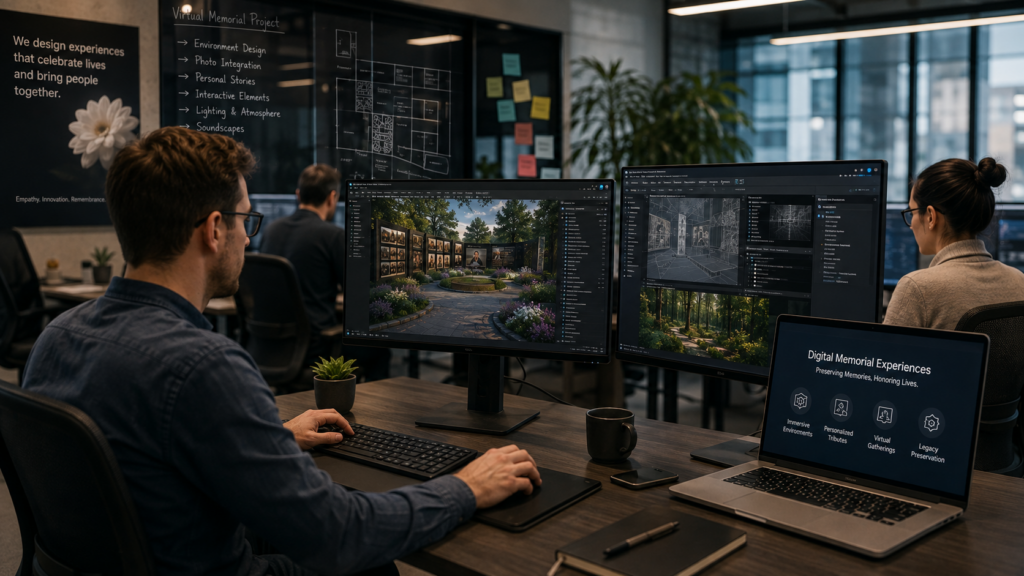
One emerging trend is the development of virtual reality memorials. These immersive digital environments allow people to explore interactive spaces, revisit meaningful locations, and engage with memories in ways that go beyond traditional photographs or videos.
Virtual reality memorial technology represents another step in the evolution of digital remembrance, following the growth of online memorial pages, virtual funerals, and AI-powered legacy tools.
What Are Virtual Reality Memorials?
Virtual reality memorials are digital environments designed to help people remember and honor deceased loved ones through immersive experiences. Using VR headsets and interactive technology, users may enter a virtual space containing photographs, videos, recordings, stories, and meaningful objects.
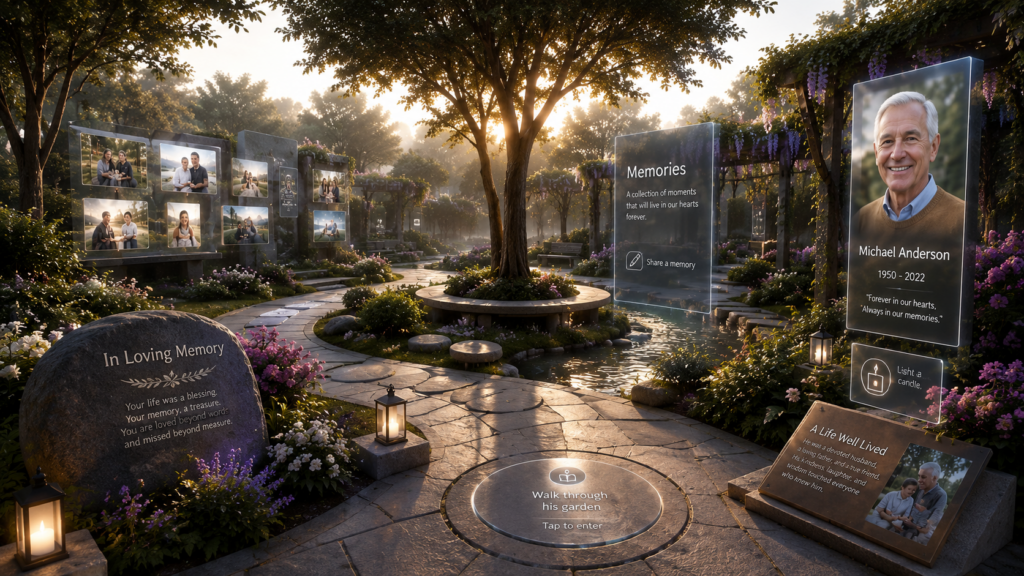
Instead of viewing memories on a flat screen, virtual reality creates a sense of presence. A person may explore a digital recreation of a favorite location, walk through a virtual garden, or view a collection of memories arranged in an interactive environment.
These experiences are part of a broader movement toward digital memorialization, where technology provides new ways to preserve personal histories.
Why Virtual Memorial Experiences Are Growing
The increasing popularity of virtual memorials is connected to several changes in modern society. Families are often spread across different locations, making traditional gatherings more difficult.
Virtual reality allows people from different places to participate in shared remembrance experiences. Relatives who cannot attend a funeral in person may still have an opportunity to engage with a memorial environment.
This trend connects with other developments covered by NewDeaths, including digital memorials, online remembrance, and changing funeral traditions.
How Virtual Reality Can Transform Memorial Services
Traditional memorial services usually rely on physical spaces, printed programs, photographs, and speeches. Virtual reality expands these possibilities by creating interactive experiences.
Examples of virtual memorial features may include:
- Digital recreation of meaningful locations
- Interactive photo and video collections
- Virtual memory rooms
- Recorded stories from family members
- Immersive celebration-of-life experiences
A family could create a virtual environment featuring a loved one’s favorite places, hobbies, achievements, and personal stories.
The Connection Between VR Memorials and Digital Legacy
Virtual reality memorials rely heavily on digital legacy information. Photos, videos, voice recordings, documents, and personal stories provide the foundation for creating immersive experiences.
As more people store their lives digitally, the amount of available information after death continues to increase. This creates new opportunities for preserving personal histories.
The Library of Congress digital preservation resources highlight the importance of protecting digital materials that represent personal and cultural history.
Virtual Reality and Grief Support
Some researchers believe immersive technology may provide additional tools for people experiencing grief. Virtual environments may allow individuals to revisit memories and reflect on important moments.
However, grief remains a deeply personal experience. Virtual reality is not intended to replace relationships, counseling, or human support systems.
Instead, VR memorials may serve as another resource for remembering loved ones and creating meaningful connections with personal history.
The Role of Artificial Intelligence in VR Memorials
Artificial intelligence is also influencing the development of virtual memorial experiences. AI tools may help organize photographs, create digital environments, and improve interactive features.
For example, AI could analyze a collection of photographs and videos to help build a timeline of someone’s life. Combined with virtual reality, these tools may create more personalized remembrance experiences.
This connects with the growing interest in AI-powered memorial technology and digital afterlife concepts.
Ethical Questions Around Immersive Memorial Technology
Although virtual reality memorials provide new possibilities, they also create important ethical questions.
Some concerns include:
- Who owns digital memories after death?
- How should personal information be protected?
- Should families receive permission before creating digital recreations?
- Could immersive experiences affect the grieving process?
The UNESCO AI ethics framework emphasizes responsible technology development and protecting human dignity.
The Future of Virtual Reality Memorials
As VR technology becomes more accessible, virtual memorials may become a larger part of the funeral and remembrance industry.
Future developments may include:
- More realistic digital environments
- AI-assisted memory organization
- Interactive family history experiences
- Virtual memorial gatherings
- Digital spaces designed for long-term remembrance
Funeral providers and technology companies are already exploring ways to combine traditional remembrance practices with digital innovation.
Balancing Technology With Human Remembrance
While technology creates new ways to remember people, the meaning behind memorials remains rooted in human connection. Stories, relationships, and shared experiences continue to define how people honor those who have passed away.
Virtual reality can provide another way to preserve those memories, but it works best when combined with genuine human experiences.
Conclusion
Virtual reality memorials represent a new chapter in the future of death care and remembrance. By combining immersive technology with personal stories, these experiences may help families preserve memories in creative and meaningful ways.
As digital memorial technology continues to develop, society will continue exploring new ways to honor lives, preserve legacies, and connect people across distances.