
Cemeteries have traditionally served as physical spaces where families visit, reflect, and honor those who have passed away. However, advances in technology are creating a new generation of burial spaces known as smart cemeteries.
Smart cemeteries combine traditional memorial practices with digital tools such as QR codes, interactive displays, digital maps, augmented reality, and online memory platforms. These innovations are changing how people connect with the stories and legacies of loved ones.
As society becomes increasingly digital, connected memorial technology is creating new ways to preserve memories beyond traditional headstones and plaques.
What Are Smart Cemeteries?
Smart cemeteries are burial spaces that use digital technology to enhance the visitor experience. Instead of relying only on traditional markers, these cemeteries may include connected features that provide additional information about individuals who are memorialized there.
A smart cemetery may include:
- QR-enabled memorial stones
- Digital biographies and photo collections
- Interactive cemetery maps
- Mobile applications
- Virtual tours
- Augmented reality experiences
These features allow visitors to access stories, photographs, and historical information using smartphones or other digital devices.
The Rise of Connected Memorials
Traditional memorials are often limited by physical space. A headstone may include a person’s name, dates, and a short message, but digital technology allows families to preserve much more information.
Connected memorials can include:
- Family photographs
- Videos
- Recorded stories
- Personal writings
- Favorite memories
- Historical documents
This shift connects with NewDeaths coverage about digital memorials, AI remembrance, and the future of death technology.
How QR Codes Are Transforming Memorial Stones
One of the most visible examples of smart cemetery technology is the use of QR codes on memorial markers.
Visitors can scan a QR code placed on a gravestone, plaque, or memorial sign to access a digital page dedicated to the person being remembered.
These digital pages may include:
- Life stories
- Family messages
- Photo galleries
- Video tributes
- Audio recordings
QR memorial technology allows families to create a more complete representation of a person’s life rather than limiting remembrance to a small physical marker.
Organizations such as Green Burial Council and other memorial organizations have highlighted how changing approaches to remembrance are influencing cemetery design and preservation practices.
Augmented Reality and Digital Cemetery Experiences
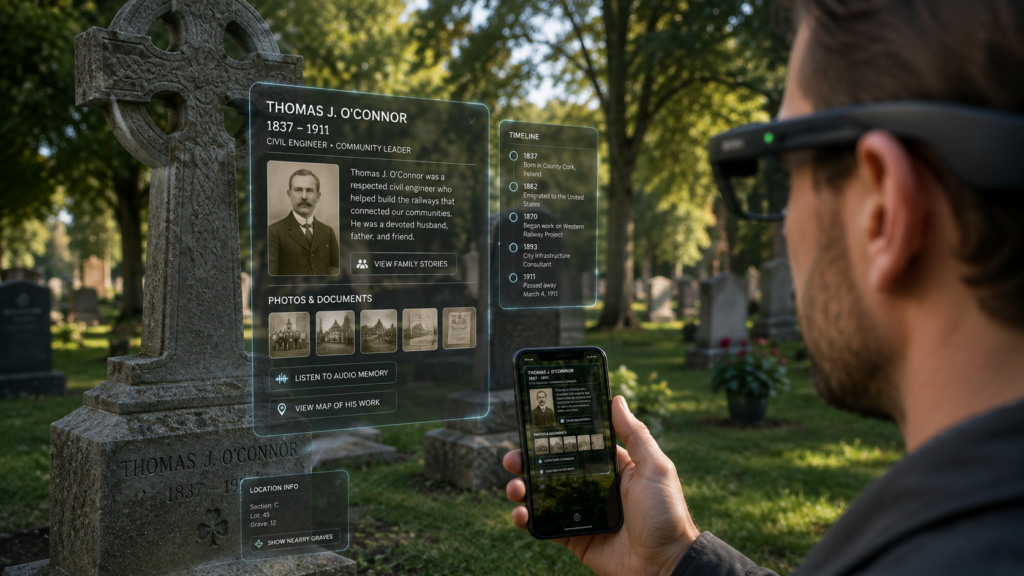
Augmented reality is another technology shaping the future of cemeteries. AR allows digital information to appear over the physical environment when viewed through a smartphone or specialized device.
For example, visitors may point their phone toward a memorial marker and view:
- A biography of the deceased
- Historical information
- Family photographs
- Recorded messages
- Interactive timelines
This technology creates a bridge between physical spaces and digital storytelling.
How Smart Cemeteries Preserve History
Beyond individual memorials, smart cemetery technology may help preserve cultural and historical information.
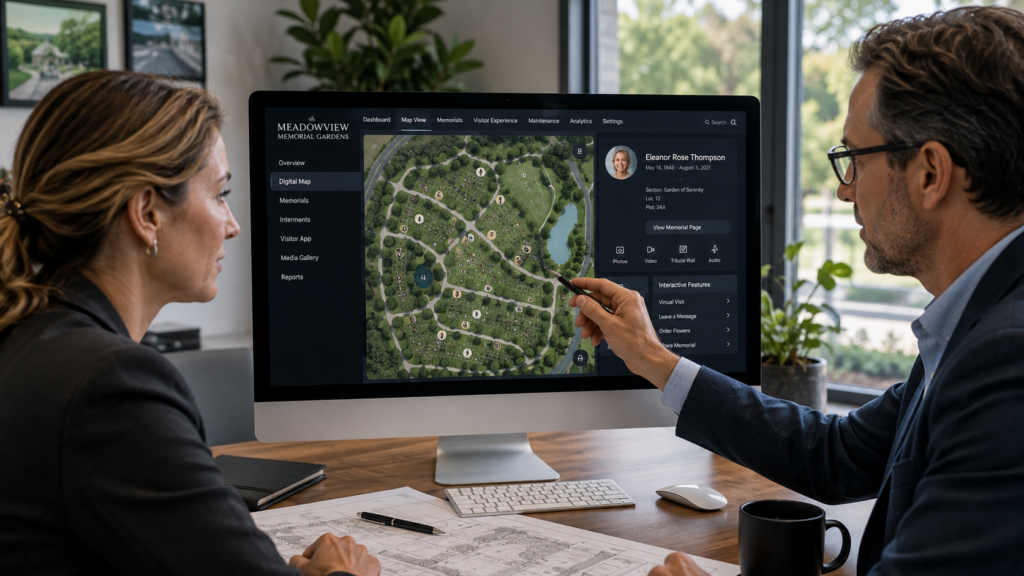
Many cemeteries contain records of generations of families, community leaders, veterans, and historical figures. Digital mapping systems can help organize these records and make them easier for visitors and researchers to explore.
The Library of Congress preservation resources highlight the importance of protecting historical materials and making valuable information accessible for future generations.
The Role of Artificial Intelligence in Smart Cemeteries
Artificial intelligence may further transform connected memorial systems by helping organize large amounts of historical and personal information.
AI tools may assist with:
- Creating digital biographies
- Organizing photographs
- Improving cemetery search systems
- Restoring old images
- Creating interactive historical archives
AI-powered cemetery systems could help families and researchers discover information that may otherwise remain difficult to access.
Environmental Benefits of Digital Memorials
Connected memorial technology may also support more sustainable approaches to remembrance.
Digital memorials can reduce reliance on printed materials and provide alternatives to expanding physical memorial spaces. Some families may choose smaller physical markers combined with larger digital archives.
This connects with growing interest in sustainable deathcare practices and environmentally conscious funeral choices.
Privacy and Security Concerns
As cemeteries become more connected, protecting personal information becomes increasingly important.
Digital memorial platforms may contain sensitive information, including family photographs, personal stories, and recordings. Providers must consider security, privacy settings, and long-term data storage.
Important questions include:
- Who manages the digital memorial?
- How long will the information remain available?
- Who can access private memories?
- How is personal information protected?
The UNESCO AI ethics recommendations emphasize responsible technology development and protecting human dignity.
The Future of Smart Cemeteries
As technology continues evolving, cemeteries may become more interactive and connected. Future memorial spaces may combine artificial intelligence, augmented reality, digital archives, and immersive experiences.
Possible future developments include:
- AI-powered memorial assistants
- Virtual cemetery tours
- Digital family history experiences
- Interactive memorial gardens
- Advanced preservation systems
These innovations may provide new ways for people to connect with history and remember loved ones.
Balancing Tradition and Technology
While smart cemetery technology introduces new possibilities, traditional forms of remembrance remain meaningful. Visiting a gravesite, placing flowers, and gathering with family continue to play an important role in honoring those who have passed away.
Technology does not replace these traditions. Instead, connected memorials add another layer by preserving more stories and creating additional ways to remember.
Conclusion
Smart cemeteries and connected memorials represent the next stage of digital remembrance. By combining physical spaces with modern technology, these systems allow families to preserve memories, share stories, and create lasting digital legacies.
As deathcare continues evolving, the future of cemeteries may involve a balance between tradition, technology, and meaningful human connection.