
The way people think about death and remembrance is changing. For generations, traditional funerals and cemeteries have focused on permanent physical memorials, but growing environmental awareness is encouraging families to explore more sustainable alternatives.
A new movement called sustainable deathcare combines environmentally friendly burial practices with modern technology. From biodegradable urns and natural burial grounds to digital memorial platforms and connected remembrance systems, the future of funerals is becoming more focused on both sustainability and personalization.
This combination of green practices and digital innovation represents a significant shift in how society approaches memory, legacy, and the environment.
What Is Sustainable Deathcare?
Sustainable deathcare refers to funeral and burial practices designed to reduce environmental impact while still providing meaningful ways to honor the deceased.
Traditional burial practices may involve materials, chemicals, and processes that require significant resources. Sustainable alternatives focus on reducing waste, protecting natural environments, and creating a closer connection between remembrance and nature.
Examples of sustainable deathcare include:
- Natural burials
- Biodegradable coffins
- Plant-based urns
- Human composting
- Water cremation
- Digital memorial alternatives
Organizations such as the Green Burial Council provide standards and education for environmentally responsible burial practices.
Why Eco-Friendly Funerals Are Growing
Environmental concerns influence many areas of modern life, including end-of-life decisions. More people are asking how their final arrangements may affect the planet.
Younger generations in particular have shown increased interest in sustainable choices, including environmentally responsible products, renewable energy, and low-impact lifestyles.
For some individuals, choosing a green funeral represents a continuation of personal environmental values.
The Rise of Biodegradable Memorials
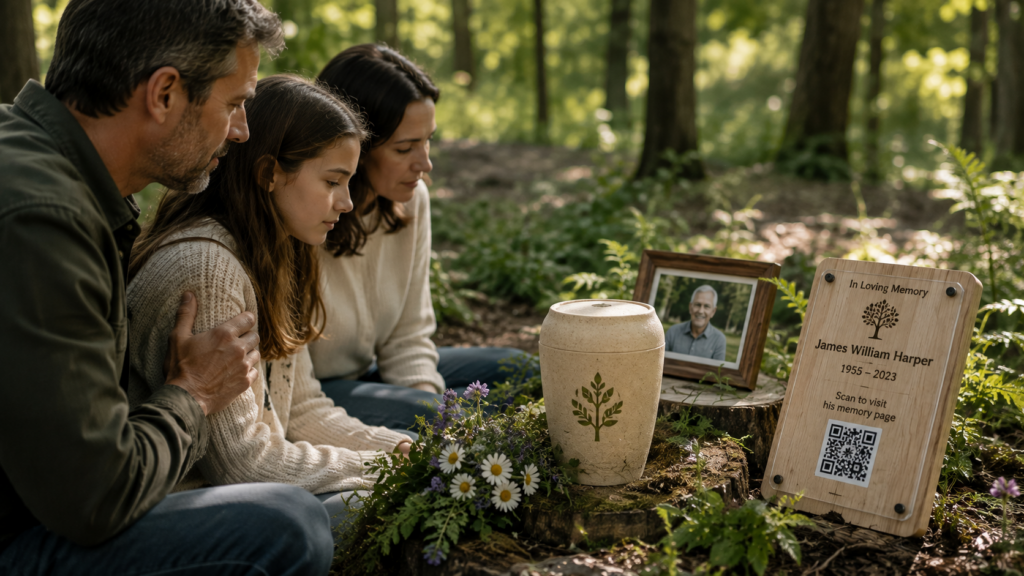
One of the most visible trends in sustainable deathcare is the development of biodegradable memorial products.
Unlike traditional materials that may remain unchanged for decades or longer, biodegradable memorial products are designed to naturally return to the environment.
Examples include:
- Biodegradable urns made from natural materials
- Wooden memorial markers
- Natural stone identification markers
- Plantable memorial products
These options allow families to create meaningful memorials while reducing environmental impact.
Combining Green Burial With Digital Memorial Technology
Sustainable deathcare is not only about physical materials. Technology is also becoming an important part of eco-friendly remembrance.
Digital memorial platforms allow families to preserve photographs, videos, stories, and messages without relying on large physical monuments.
A small biodegradable marker combined with a digital memorial page can provide a complete remembrance experience while using fewer physical resources.
This connects with NewDeaths articles covering digital memorials, AI legacy preservation, and future funeral technology.
QR Memorials and Sustainable Remembrance
QR technology is becoming one of the simplest ways to connect physical memorials with digital experiences.
A QR code placed on a sustainable memorial marker can provide access to:
- Life stories
- Family photographs
- Recorded messages
- Digital guestbooks
- Historical information
This allows families to create detailed memorial experiences without requiring large physical structures.
Companies specializing in digital remembrance solutions have helped expand the use of connected memorial technology in cemeteries and memorial gardens.
Living Memorials and Tree Planting Tributes
Another growing trend is the use of living memorials. Instead of traditional markers, some families choose trees, gardens, or natural landscapes as places of remembrance.
Living memorials symbolize continuation, renewal, and connection with nature. They also provide environmental benefits by supporting ecosystems and creating green spaces.
Some sustainable memorial programs allow cremated remains or memorial materials to become part of planting projects.
The National Geographic environmental resources have highlighted growing public interest in conservation-focused approaches to human interaction with nature.
The Role of Technology in Future Green Cemeteries
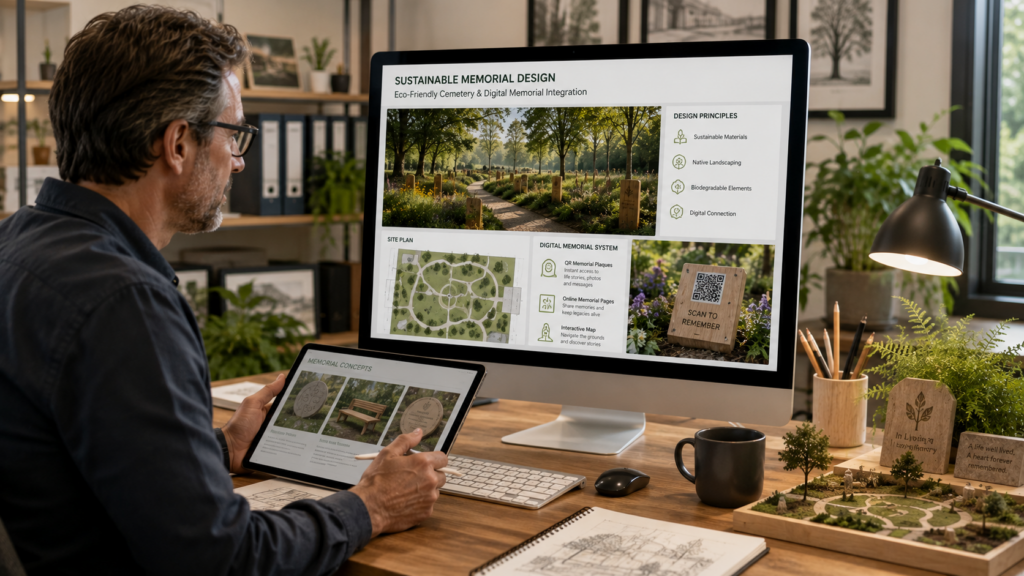
Future cemeteries may combine sustainable landscaping with advanced digital systems.
Smart green cemeteries may include:
- Digital cemetery maps
- QR memorial markers
- Mobile remembrance applications
- Virtual memorial visits
- Environmental monitoring systems
Technology can help visitors locate memorials, learn personal histories, and interact with remembrance spaces while maintaining environmentally responsible designs.
Challenges of Sustainable Deathcare
Although interest in sustainable funerals is growing, several challenges remain.
These include:
- Limited availability of green burial locations
- Different regulations between regions
- Public unfamiliarity with alternatives
- Questions about long-term digital storage
Families considering sustainable options should research available services and understand local requirements before making decisions.
The Future of Eco-Friendly Memorial Technology
The future of deathcare will likely involve a combination of environmental responsibility and digital innovation.
Instead of choosing between traditional remembrance and modern technology, families may increasingly combine both approaches.
A biodegradable memorial marker, digital archive, and environmentally friendly burial location can create a complete legacy experience that honors both the individual and the planet.
Balancing Tradition, Technology, and Sustainability
Funeral traditions have always evolved alongside cultural changes. Digital memorials, green burials, and sustainable technology represent the latest chapter in this evolution.
While technology provides new opportunities, the purpose remains unchanged: remembering people, honoring their lives, and supporting those who continue after loss.
Conclusion
Biodegradable memorial technology represents the intersection of sustainability and modern remembrance. By combining eco-friendly practices with digital tools, families can create meaningful memorial experiences that protect the environment while preserving personal stories.
As sustainable deathcare continues developing, future generations may view environmentally conscious and technology-supported memorials as a natural part of honoring life.