
The funeral industry has traditionally depended on personal relationships, careful planning, and face-to-face communication. However, as technology continues changing everyday life, artificial intelligence is beginning to reshape how families plan funerals, organize memorial services, and manage the many responsibilities that follow a death.
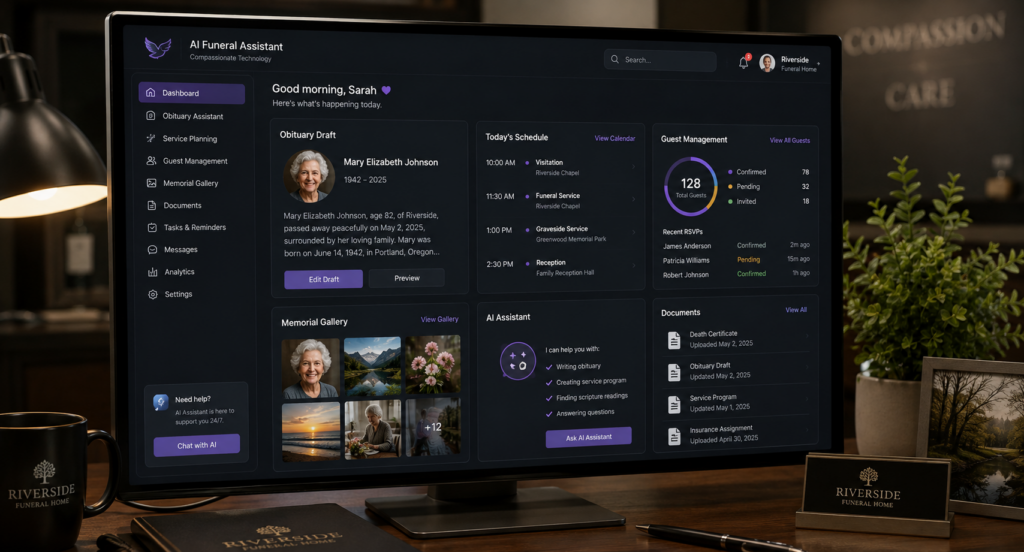
AI funeral assistants are emerging as a new category of deathcare technology designed to help families and funeral professionals manage information, paperwork, scheduling, and memorial preparation. These tools are not designed to replace funeral directors or human compassion. Instead, they are being developed to reduce administrative challenges and allow professionals to spend more time supporting families.
Technology companies and funeral service providers are increasingly exploring AI solutions for tasks such as obituary assistance, digital paperwork management, online planning, and family communication. Industry reports on funeral technology trends show that AI-powered tools and digital family experiences are becoming important areas of innovation in modern deathcare.
What Are AI Funeral Assistants?
AI funeral assistants are artificial intelligence tools created to support different parts of the funeral planning process. They may help organize information, answer basic questions, prepare documents, and assist families with decisions during a difficult time.
Unlike traditional software, AI systems can analyze information and provide suggestions based on user needs. For example, an AI assistant may help organize a person’s life details into an obituary draft or help a family create a checklist for memorial planning.
The purpose of these tools is not to automate grief or replace human interaction. Instead, AI can help reduce repetitive administrative work so funeral professionals can focus on providing emotional support.
Why AI Is Entering the Funeral Industry
Funeral planning involves many details, including selecting services, preparing documents, communicating with relatives, arranging schedules, and creating memorial materials. For families experiencing grief, managing these responsibilities can feel overwhelming.
AI technology offers potential solutions by helping organize complex information and making planning more accessible.
Some funeral technology platforms are focusing on:
- Digital funeral planning
- Online forms and documents
- Obituary assistance
- Memorial website creation
- Family communication tools
- Administrative workflow automation
Recent funeral technology research highlights that modern families increasingly expect digital convenience, including online planning tools and easier access to funeral information.
How AI Can Help With Funeral Planning
Planning a funeral requires gathering information from many sources. Families may need to collect photographs, personal stories, important dates, and preferences while also coordinating with multiple people.
AI funeral assistants may help simplify this process by organizing information into manageable steps.
Creating Obituaries
Writing an obituary can be emotionally challenging. Families often struggle to summarize an entire lifetime into a short tribute.
AI tools can help create a first draft using information provided by family members. The final wording can then be reviewed and personalized to ensure the obituary accurately reflects the person’s life.
Managing Digital Memorials
AI can also support digital memorial creation by organizing photographs, videos, and stories into online tribute pages.
NewDeaths has previously explored related topics including AI memorials, digital legacy preservation, and modern remembrance technology.
AI and the Future of Funeral Home Operations
Funeral professionals manage many behind-the-scenes responsibilities. AI may help improve internal workflows by organizing records, reducing repetitive tasks, and improving communication.
Potential applications include:
- Digital case management
- Document organization
- Scheduling assistance
- Family information management
- Follow-up reminders
Some funeral technology providers emphasize that the most valuable role for AI is supporting staff behind the scenes while keeping important family interactions human-centered.
The Role of AI in Grief Support
Beyond funeral planning, artificial intelligence is also being explored as a tool for grief resources and emotional support.
AI-based systems may provide general information about grief, help people find resources, and assist with organizing memories. However, these tools are not replacements for counselors, support groups, or personal relationships.
Experts have raised important questions about privacy, emotional impact, and responsible use when AI interacts with people experiencing loss.
Benefits of AI Funeral Assistants
When used responsibly, AI funeral assistants may provide several benefits:
- Less administrative stress: Families can receive help organizing information during difficult moments.
- Better organization: Important details can be stored and managed more efficiently.
- Improved accessibility: Families can begin planning digitally from anywhere.
- More personalized memorials: AI can help organize stories, photographs, and meaningful details.
Ethical Concerns and Human Oversight
Because funeral services involve deeply personal experiences, AI adoption requires careful consideration.
Important questions include:
- How is personal information protected?
- Who controls stored family memories?
- Should AI-generated content always require human review?
- How can technology support grief without replacing human connection?
Responsible AI development requires transparency, privacy protection, and respect for families during vulnerable moments.
Organizations such as the UNESCO AI Ethics guidelines emphasize the importance of human-centered and responsible artificial intelligence.

The Future of AI Funeral Technology
As technology continues advancing, AI funeral assistants may become a common part of modern deathcare services.
Future developments may include:
- Advanced memorial planning assistants
- AI-powered family communication tools
- Improved digital archives
- Personalized remembrance experiences
- Smarter funeral home management systems
However, the future of funeral technology will depend on maintaining a balance between innovation and compassion.
Why Human Connection Will Always Matter
Death is one of the most emotional experiences people face. While AI can organize information and simplify tasks, it cannot replace empathy, understanding, and personal connection.
The most successful funeral technology will likely be the technology that helps professionals provide better care rather than technology that attempts to replace the human experience.
Conclusion
AI funeral assistants represent a major development in the future of deathcare. By helping with planning, organization, and digital memorial creation, artificial intelligence may reduce stress for families and improve funeral services.
As this technology continues evolving, the most important goal remains the same: helping people honor lives, preserve memories, and support one another during times of loss.