For many families, a funeral begins when relatives gather at a chapel or cemetery. But another approach is receiving renewed attention: allowing family and close friends to take a more active role in caring for someone after death, preparing a vigil, and organizing a farewell. The approach is commonly called a family-led home funeral.
A home funeral does not have to mean a large ceremony in a private residence. It can involve a brief vigil, personally chosen rituals, assistance from a licensed funeral director, or a greater degree of direct family involvement where local laws permit. In 2026, as consumers explore more personal forms of deathcare, home-funeral education is drawing interest alongside conventional funerals and celebrations of life.
There are important legal and practical limits. The ability to retain or transport a body, arrange documentation, and carry out specific tasks depends on the jurisdiction and circumstances of the death. Families should verify those requirements before proceeding.
What Is a Home Funeral?
The Funeral Consumers Alliance defines a home funeral as an arrangement in which family or friends take responsibility for some aspects of care after death, either on their own or with help from professionals. Activities may include choosing a setting, spending time with the deceased, organizing a farewell, or, where lawful and feasible, participating in certain preparation and transport tasks.
The word home describes the family-centered nature of the arrangement, not an absolute rule about the location. Some ceremonies happen in a family residence; others involve a care facility, religious community, funeral home, or another place where relatives are welcome to participate.
Why Families Are Considering Home Funerals
Families may want more time, more control over rituals, a familiar environment, or a stronger sense of participation. Some seek to continue cultural or religious customs that involve relatives in care after death. Others simply prefer a quiet farewell without the pace and structure of a conventional service.
A recent guide on home-funeral planning published in October 2026 reflects growing consumer interest in these arrangements, although it should not be interpreted as a reliable measure of how many families choose them.
NewDeaths has already covered personalized celebrations of life. A family-led home funeral is related but different: it can include actual after-death care and additional responsibilities, not only a personalized ceremony.
Are Home Funerals Legal in the United States?
In many US states, families can legally carry out at least some aspects of after-death care. However, specific rules vary considerably. Some states require a licensed funeral director to handle certain paperwork, transportation, supervision, or disposition arrangements.
The National Home Funeral Alliance’s state-law resource offers an introductory starting point, while cautioning that its summaries are being updated. For an actual arrangement, confirm the current rules with the relevant state vital-records office, funeral licensing board, local health authority, cemetery, or crematory.
Do not assume rules from a different state apply to your family. A death occurring at home, in a hospital, in another state, or under a medical examiner’s jurisdiction may lead to different procedures.
How Is a Home Funeral Different From a Home Memorial?
A home memorial can be held without the body present, often after burial or cremation. Families may gather for a meal, speeches, music, prayer, a video tribute, or a memory table. That kind of gathering is generally far simpler to organize than caring for a body after death.
A home funeral may involve the deceased’s presence and responsibilities for their care. This can introduce permits, transport rules, identification procedures, time limits, medical restrictions, and practical questions about temperature and hygiene.
The distinction matters because a family may want the emotional intimacy of a home gathering without taking on the additional requirements of home after-death care. Both choices can be meaningful.
What Paperwork May Be Required?
Legal requirements can include medical certification of death, registration of the death, burial or transit permits, cremation authorization, and documents from a medical examiner or coroner when relevant. The exact forms, deadlines, and authorized signers vary.
The Funeral Consumers Alliance’s step-by-step overview explains the categories of paperwork families may need. Rather than relying on a generic online checklist, confirm the process locally and with the receiving cemetery or crematory before making assumptions about transport or final disposition.
Keep records together and identify one relative who can coordinate questions, authorizations, and contact information. This can reduce confusion while preserving space for others to grieve.
Body Care Requires Practical and Professional Judgment
Caring for a deceased person may be emotionally meaningful, but it is not a task families should approach without preparation. Cooling, infection-control precautions, personal protective equipment, handling, and the circumstances of death may affect what can safely and lawfully be done.
The Massachusetts Funeral Information guide discusses family-led care and the importance of advance coordination with relevant professionals and agencies. Its guidance is specific to Massachusetts and should not be treated as universally applicable.
When a death involves an infectious disease, significant trauma, an investigation, or other complicating circumstances, families should obtain individualized direction from medical professionals and local authorities. It is reasonable to choose professional assistance for every part of body care while keeping the memorial ceremony family-led.
Can a Funeral Director Still Help?
Yes. A home funeral does not have to exclude licensed funeral professionals. Families can ask a provider to handle documentation, refrigeration, transport, cremation coordination, or other regulated services while relatives arrange readings, music, a vigil, and a personal farewell.
Ask the funeral home to specify which responsibilities it will take on, which tasks the family will manage, and the cost of each service. The FTC Funeral Rule gives US consumers protections when purchasing funeral goods and services, including the right to itemized information and the ability to select individual items subject to limited exceptions.
For help understanding standard service vocabulary, see NewDeaths’ funeral terminology guide.
What Does a Home Funeral Guide Do?
A home funeral guide or educator can help families understand available options, plan a ceremony, locate educational materials, and prepare questions for authorities and licensed providers. In jurisdictions where particular services require a license, an unlicensed guide should not independently perform those regulated tasks.
The National Home Funeral Alliance resource overview describes education, community support, and guidance as central to the movement. Families should ask any guide about training, experience, scope of services, insurance, and the boundaries of their role.
NewDeaths has also explored the work of end-of-life doulas and personalized care. A doula may provide nonmedical emotional and planning support, but that is not identical to acting as a licensed funeral director.
How Can a Family Create a Meaningful Vigil?
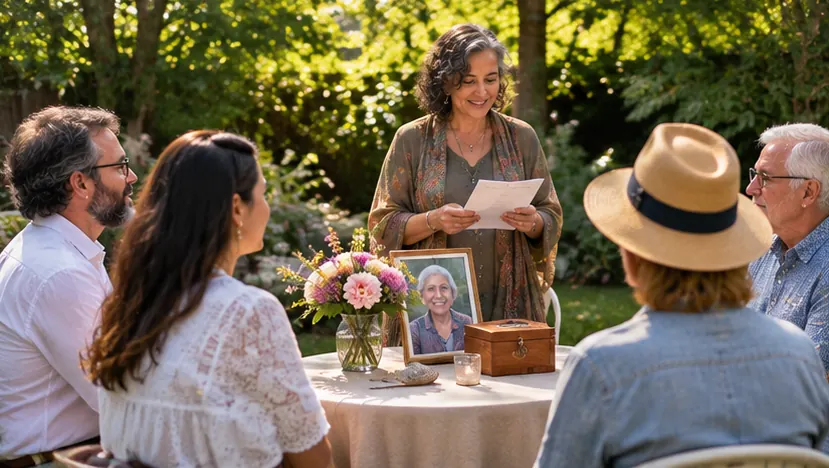
The most personal part of a home funeral often requires little technology or expense. Some families choose readings from meaningful books, invite guests to share a memory, arrange photographs, play favorite music, or observe a religious custom. Others prefer quiet time in smaller groups.
Participation should be voluntary. Not every relative will feel comfortable with the same activities, and no one should be pressured into direct care. If children are present, adults can explain the gathering in age-appropriate language and allow them to participate in ways that feel safe.
A family can also pair a simple vigil with an online tribute for relatives who cannot travel. NewDeaths has covered how digital obituaries connect families and communities across different locations.
Does a Home Funeral Always Cost Less?
Not necessarily. Some families save money by arranging more of the ceremony themselves, but required permits, transportation, cooling, supplies, professional services, burial or cremation charges, and venue needs may still create costs.
The Funeral Consumers Alliance guide to paying for arrangements recommends defining an affordable budget before purchasing services. Compare realistic totals rather than assuming that family participation automatically makes every option inexpensive.
Planning Ahead Helps Protect Choice
Discuss the idea before an urgent need whenever possible. Identify who would coordinate arrangements, which participants are comfortable helping, which funeral professionals or community groups could provide assistance, and what documentation your state requires.
The National Institute on Aging’s advance-planning checklist recommends documenting funeral preferences and sharing important records with trusted relatives. Keeping those preferences accessible can make a family-led farewell easier to coordinate when the time comes.
Conclusion
Family-led home funerals in 2026 offer an alternative for people seeking a more participatory farewell. They can preserve cultural traditions, create time for memories, and allow families to shape the ceremony in a familiar setting.
They also require clear decisions about care, responsibility, legal documentation, transport, and safety. Some families may choose extensive involvement; others may prefer professional handling with a home-based vigil or memorial. A thoughtful plan respects both the wishes of the deceased and the comfort of the living, while ensuring every required step is handled appropriately.