
For millions of people, losing a dog, cat, horse, bird, or other companion animal does not feel like losing “just a pet.” Animals become part of daily routines, family traditions, emotional support systems, and some of the most meaningful relationships people experience.
That is one reason pet loss memorials are becoming a more visible part of grief and remembrance in 2026. Families are creating personalized urn displays, digital tribute pages, memorial gardens, keepsake jewelry, photo books, charitable donations, and remembrance ceremonies that acknowledge the importance an animal had in their lives.
Research into online grief behavior also suggests strong interest in pet-loss information. The 2026 Grief Search Report identified pet loss as a significant category of death- and grief-related online searches, reinforcing how many people look for information and support after an animal dies.
Why Pet Loss Can Produce Profound Grief
Companion animals occupy unusual roles in human life. They are present during ordinary mornings, family changes, illnesses, celebrations, moves, relationships, and periods of loneliness. Because pets become woven into everyday routines, their absence can affect far more than a single part of someone’s life.
The Cornell University College of Veterinary Medicine explains that grieving a companion animal can involve emotional, physical, intellectual, social, and spiritual responses. Cornell also notes that there is no single “normal” timeline for pet grief.
The Association for Pet Loss and Bereavement describes pet-loss grief as something that may be misunderstood or minimized by others. That lack of recognition can make grief feel particularly isolating.
NewDeaths has explored similar questions about emotional support after human loss in its article on AI grief companions and bereavement support. Whether the loss involves a person or an animal, meaningful remembrance can become one way of giving grief a place to go.
Why Memorializing a Pet Can Matter
A memorial does not have to be elaborate. Its purpose is simply to acknowledge that the relationship mattered.
Some people want a physical place they can visit. Others prefer something portable, such as a piece of jewelry or a tag carried on a keychain. A digital tribute may work better for a family whose members live in different places.
Cornell’s pet-loss resources suggest many memorialization ideas, including keeping an urn beside a favorite photograph, planting a tree, creating a scrapbook, making a keepsake from fur or ashes, writing memories down, creating art, or making a charitable donation.
These options reflect a larger change in memorial culture: remembrance is becoming more personalized rather than following a single expected format.

Personalized Urns Are Becoming Part of the Home
For families choosing individual cremation, the urn may become the central memorial object.
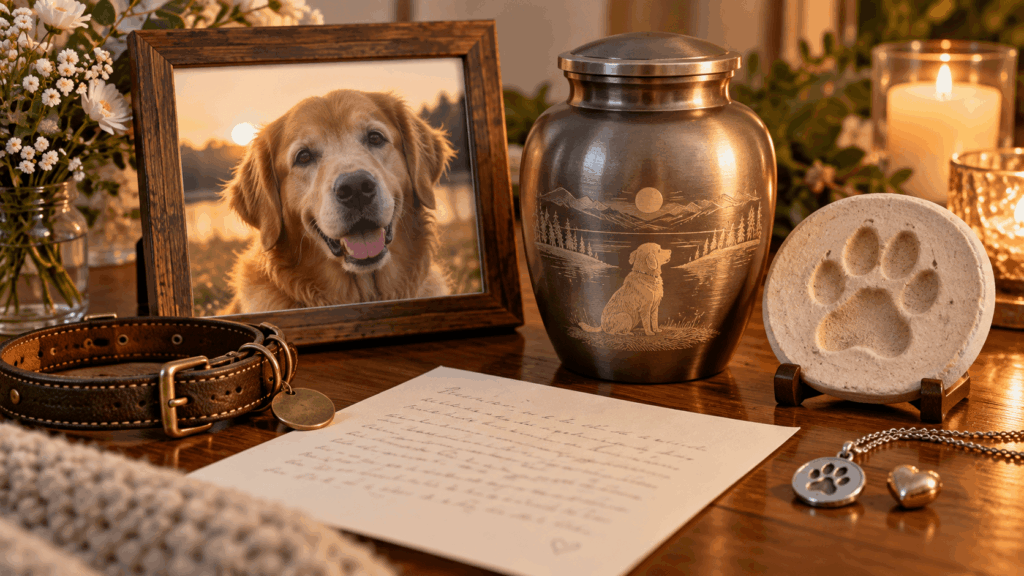
Instead of hiding cremated remains away, some people create a small remembrance area with a photograph, collar, identification tag, favorite toy, paw print, candle, or flowers.
The urn itself may reflect the animal’s personality through photographs, engraving, woodwork, colors, or a simple nameplate.
Cremation is not the only available choice. Cornell, for example, also provides information about hydrocremation for companion animals, illustrating how disposition choices for pets are also evolving.
Digital Pet Memorials Are Expanding Remembrance
Pet photographs increasingly live on phones and cloud accounts rather than in physical albums. That makes digital memorialization a natural option for many families.
A digital pet memorial may contain:
- Favorite photographs and videos
- A written life story
- Adoption-day memories
- Voice recordings or videos featuring the animal
- Messages from family and friends
- Stories about favorite habits and adventures
Unlike a single framed photograph, a digital archive can preserve years of material and make it available to relatives anywhere.
This mirrors trends NewDeaths has covered in virtual memorial technology and other forms of digital remembrance. The technology may change, but the purpose remains familiar: preserving stories that might otherwise disappear.
Memorial Jewelry Creates a Portable Connection
Some families choose jewelry or small keepsakes that incorporate a tiny amount of cremated remains, fur, whiskers, an engraved paw print, or the pet’s name.
The appeal is partly practical. A large memorial stays in one location, while a pendant, bracelet, keychain, or small keepsake can travel with its owner.
Cornell includes jewelry and keepsakes among its suggested ways to remember an animal. The choice remains deeply personal. Some people find comfort in carrying a physical reminder; others prefer photographs or natural memorials.
There is no requirement that grief look a particular way.
Memorial Gardens and Trees Bring Remembrance Outdoors
For animals that loved being outside, a living memorial may feel especially appropriate.
Families may plant a tree, flowers, or a small garden and add a stone or wooden marker. Cremated remains may be kept separately, scattered where legally and environmentally appropriate, or incorporated into another memorial plan.
NewDeaths has explored the broader growth of living memorials and memorial trees. Many of the same ideas translate naturally to pet remembrance.
A tree also changes with time. That continuing growth can offer a different kind of symbolism than a static memorial object.
Families Are Holding Pet Remembrance Ceremonies
A formal funeral is not required to create ritual after a pet dies.
Some families gather in a backyard or favorite park, share stories, read a letter, scatter flowers, look through photographs, or allow children to say goodbye in their own way.
The Ohio State University Veterinary Medical Center’s Honoring the Bond program demonstrates how organized animal-remembrance ceremonies can provide space to acknowledge the human-animal relationship.
Children may particularly benefit from being included appropriately. Cornell encourages families to be honest with children about a pet’s death and notes that activities such as drawing pictures, writing stories, or sharing memories can help them participate in memorialization.
Charitable Giving Can Become a Living Tribute
Not every pet memorial needs to involve an object.
Some families donate to veterinary research, shelters, rescue organizations, or animal welfare programs in the animal’s name. The Cornell College of Veterinary Medicine memorial giving program and Ohio State’s pet memorial program are examples of remembrance tied to future animal care and research.
For some owners, helping another animal creates a particularly meaningful continuation of the bond they had with the pet they lost.
Support Matters as Much as Memorialization
A memorial can provide comfort, but it is not a substitute for human support.
Pet owners experiencing grief may benefit from speaking with relatives who understand the relationship, pet-loss support groups, veterinary social workers, counselors, or dedicated support lines.
The Ohio State Veterinary Medical Center maintains pet-loss support resources, while Cornell operates a pet-loss support hotline staffed by trained veterinary students.
APLB also offers pet-loss support communities designed specifically for people grieving companion animals.
Choosing the Right Pet Memorial
There is no best memorial for every family. A helpful starting point is to think about what made the animal distinctive.
A dog that lived for walks may be remembered with a tree along a favorite path. A cat that always slept beside a window might be honored with a photograph and small keepsake in that room. A horse may be remembered through artwork, a preserved nameplate, or a donation to an equine rescue.
Meaning usually matters more than complexity or expense.
The Future of Pet Memorialization
Pet memorials in 2026 increasingly combine physical keepsakes with digital remembrance. A family may have an urn at home, a memorial tree outside, and an online archive containing hundreds of photos.
That mix closely resembles wider deathcare trends covered by NewDeaths, including sustainable memorial technology and personalized remembrance.
The underlying change is cultural. More people are recognizing that the death of a companion animal can be a significant family loss and that memorializing that relationship can be a legitimate part of grieving.
Conclusion
Pet loss memorials provide families with ways to acknowledge relationships that may have shaped years of everyday life. An urn, photograph, garden, donation, piece of jewelry, digital tribute, or remembrance ceremony cannot remove grief, but it can preserve the stories attached to it.
As pet-loss support and memorial options continue expanding, families have more freedom to choose forms of remembrance that reflect the animal they loved rather than follow a single tradition.