
Photographs can preserve a face, recordings can preserve a voice, and handwritten letters can preserve someone’s words. But for families grieving a death, another small detail may carry extraordinary meaning: the shape of a loved one’s hand. In 2026, 3D hand memorial keepsakes are attracting attention as digital scanning and traditional craftsmanship come together to create tactile tributes.
The idea is simple but emotionally distinctive. Instead of keeping only an image of a handprint, a family can preserve its three-dimensional contours in a lasting physical object. One such innovation earned recognition among the National Funeral Directors Association’s 2026 Innovation Award finalists, showing how funeral keepsakes continue evolving beyond traditional photographs, jewelry, and printed memorial cards.
What Is a 3D Hand Memorial Keepsake?
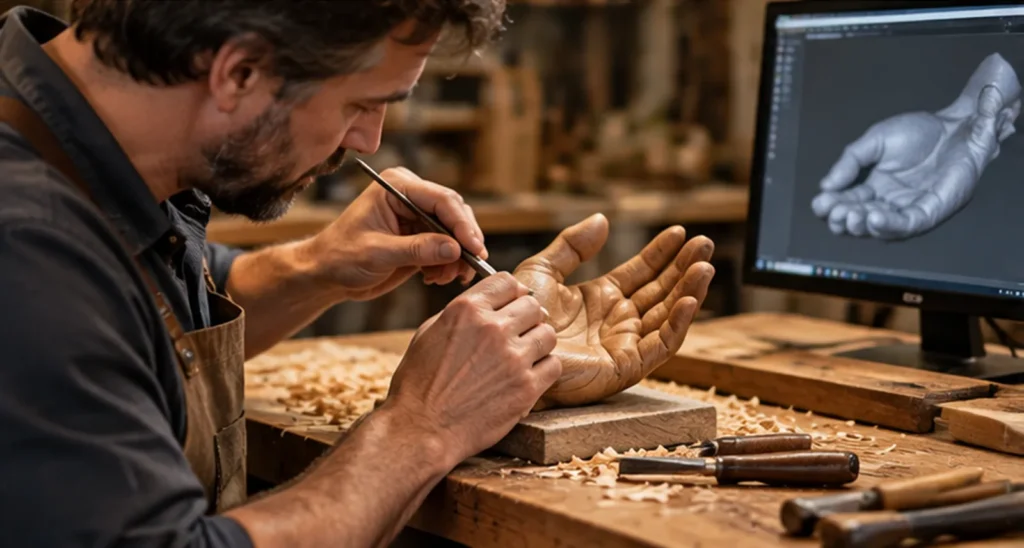
A 3D hand memorial is a physical representation of a person’s hand that preserves its shape rather than only a two-dimensional impression. Depending on the process, the finished piece might be a carved wooden hand, a cast, or another sculptural object. The result may capture distinctive features such as the curve of the palm, the position of the fingers, and the overall hand shape.
This is different from a fingerprint pendant or an ink handprint. Those can be meaningful, too, but they preserve selected surface details rather than the broader form of the hand. A three-dimensional keepsake offers something a person can hold and view from different angles.
It also differs from a digital avatar. NewDeaths has covered AI afterlife avatars and digital twins; a hand carving does not simulate speech or conversation. Its value lies in an authentic physical detail, not an artificial recreation of personality.
Why Hand Scanning Became a 2026 Funeral Innovation
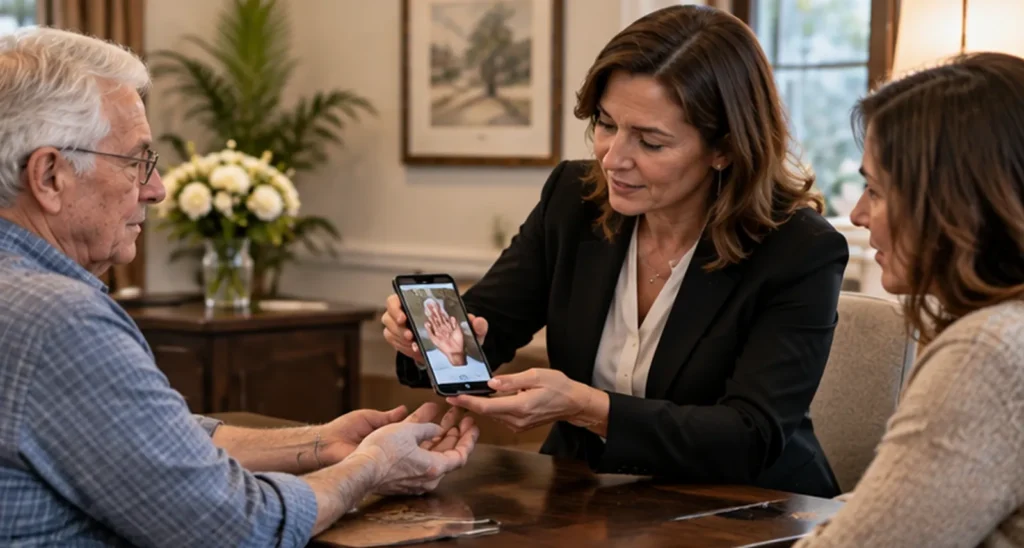
The NFDA Innovation Award program recognized The Impression Vault’s Almorial as a 2026 finalist. The company describes a system in which a funeral professional uses a phone or tablet to scan a hand in approximately 90 seconds. The information can be retained securely while the family decides whether to order a finished object.
If a family chooses to proceed, the company creates a hand-finished carving in solid wood. This is a particular commercial approach, not a universal process or a guarantee about what every 3D scanning service can produce. Nevertheless, it shows how a task once associated with time-consuming molding can be approached with accessible digital tools.
It is also part of a broader technical shift. The Smithsonian’s 3D digitization projects demonstrate how scanning can document the shape of real objects and make their form available for future viewing. Memorial services apply the general idea to an intimate family keepsake rather than a museum collection.
Why the Shape of a Hand Can Be Meaningful
Hands are closely linked to memories. A parent may remember holding a child’s hand while crossing a street. A grandchild may remember helping a grandparent cook, garden, repair furniture, or turn the pages of a book. An adult may remember the reassuring touch of a spouse or parent during difficult moments.
For those families, the distinctive size and contour of a hand can symbolize years of ordinary experiences. A memorial object may become a prompt for stories that are harder to evoke through formal dates and biographical details alone.
That does not make a hand sculpture necessary for grieving. Some people find three-dimensional representations comforting; others may prefer photographs or a simpler object. A respectful memorial choice begins with the family’s wishes rather than assumptions about what grief should require.
Digital Scanning and Traditional Craftsmanship
A typical digital-to-physical workflow has several distinct stages: capturing the hand’s shape, reviewing or preparing a usable digital model, producing a physical piece, and applying a finishing process. The techniques and materials depend on the provider.
Digital capture is only the starting point. A skilled maker still has to think about surfaces, proportions, finish, durability, and how the object will be handled in a home. Wood may appeal to families who prefer a warm, natural material rather than plaster or resin.
The craftsmanship matters because a keepsake is likely to be touched repeatedly. Sharp edges, delicate projections, unstable bases, or a finish that cannot tolerate handling could diminish its usefulness as a personal object.
When Should Families Discuss a Hand Keepsake?
If a hand scan is to be captured after death, timing may be important. Families should ask the funeral director promptly whether scanning is available, appropriate under the circumstances, and compatible with the care and preparation being provided.
Availability is not universal. A funeral home may not offer the technology, and practical, cultural, religious, medical, or legal circumstances can affect what is possible. Families should never feel pressured to decide immediately simply because a product is presented as innovative.
A particularly useful feature of some digital scanning workflows is the possibility of recording the shape first and postponing the purchase decision. Ask the provider how long that scan can be retained, whether deletion is available, and what happens if the company later changes systems or closes.
How Does a Hand Sculpture Compare With Other Keepsakes?
Memorial keepsakes can preserve different aspects of a person’s identity. Each has strengths and limits:
- Photographs: capture appearance, relationships, and moments
- Voice recordings: preserve speech, laughter, and personal stories
- Fingerprints: preserve a recognizable surface pattern in jewelry or artwork
- Handprints: preserve the outline or imprint of a hand
- 3D sculptures: preserve a physical form that can be held
- Written memories: record the stories behind the object
Several of these formats can work together. The Library of Congress’s personal photo preservation guidance recommends choosing significant images, documenting them, and keeping copies in multiple locations. Pairing a hand keepsake with labeled photographs can make both more meaningful to later generations.
Privacy and Consent Deserve Attention
A scan of someone’s hand is more than an ordinary purchase detail: it is a digital representation of their body. Families should therefore understand how the files will be stored, who can access them, whether they are shared with contractors, and when they can be deleted.
If the person expressed preferences about post-death keepsakes, those wishes should guide the decision. Funeral providers also need to follow applicable policies and legal requirements. A family may reasonably choose to restrict the scan to private use rather than display the object publicly or share it on social media.
For digital records that the family keeps, the Library of Congress’s personal digital records advice emphasizes clear file names, careful organization, copies in separate places, and periodic checks that files remain readable.
Questions to Ask Before Ordering
Because 3D keepsakes are specialized products, compare what is actually included before authorizing an order. Useful questions include:
- What is the finished size and material?
- Is the carving based on an actual scan or a stylized interpretation?
- Can the family see a sample of the finish and detail?
- How long does production take, and what does shipping involve?
- Can the design be reviewed before the piece is completed?
- Who owns the digital scan, and can it be deleted?
- What is the total price, including the base, engraving, and delivery?
Families should also request written pricing. The FTC funeral cost checklist explains how to compare funeral goods and services and distinguish optional merchandise from other charges. A separate memorial product should be evaluated for its own value rather than treated as something every family must buy.
Making the Keepsake Part of a Life Story
A sculpture becomes more meaningful when paired with context. A small card might explain that the hand belonged to someone who baked bread every Sunday, built toys for children, tended roses, or always reached out first to welcome guests.
That storytelling approach reflects the NFDA’s 2026 recognition of personalized memorial experiences. It also complements NewDeaths’ article on personalized celebrations of life, where photographs, meaningful objects, music, and shared stories help make a tribute distinctive.
The Future of Tangible Digital Memorials
Three-dimensional hand keepsakes suggest an interesting direction for deathcare: digital technology need not result in something that stays on a screen. It can also help make a physical object that families can hold, display, and pass down.
NewDeaths has already examined connected memorials and smart cemeteries, where digital information augments a physical place. Hand carvings reverse the relationship by using a digital process to create a physical remembrance object.
Conclusion
3D hand memorial keepsakes offer a distinct way to preserve a personal detail that photographs or words may not capture fully. The technology highlighted by the NFDA in 2026 combines fast digital scanning with traditional wood craftsmanship, although availability, costs, privacy terms, and individual preferences vary.
A hand sculpture is not essential to remembering someone. For families who find meaning in touch, however, it may become a powerful object through which ordinary memories are kept close and shared with future generations.