For decades, the direction of American deathcare appeared straightforward: cremation was rising while traditional casket burial was steadily declining. Younger generations were widely expected to accelerate that transition.
New research is complicating that assumption.
Studies of Gen Z funeral preferences show surprisingly strong interest in casketed burial, viewing the deceased, funeral professionals, and other practices that are often described as traditional. The findings do not prove that cremation is about to decline, but they suggest the future of funerals may be less predictable than long-term national trends imply.
A 2026 Wake Forest Law survey on deathcare preferences found particularly strong interest in casket burial among Gen Z respondents. That makes the generation an important group to watch as the funeral industry plans for the coming decades.
A Surprising Generational Difference
The Wake Forest study surveyed American adults about cremation, casket burial, donation to science, green burial, human composting, and alkaline hydrolysis.
Its generational findings stood out. Gen Z participants showed substantially greater interest in casketed burial than older generations in the survey.
This finding is not entirely isolated. The National Funeral Directors Association’s generational funeral preferences research also found that Gen Z expressed a greater preference for traditional burial than older respondents and placed particular value on funeral professionals.
Different surveys produce different percentages because their questions and samples differ, but both point toward the same unexpected idea: the youngest adult generation may be more interested in some traditional death rituals than commonly assumed.
Why This Seems to Contradict the Cremation Trend
At the national level, cremation remains dominant.
The NFDA Cremation & Burial Report projected a 2025 U.S. cremation rate of 63.4%, compared with a burial rate of 31.6%. NFDA expects cremation’s national share to continue increasing over the long term.
So how can Gen Z favor burial while cremation continues growing?
Preference and actual behavior are not necessarily identical. The final choice after a death can be influenced by:
- Cost
- Family wishes
- Religious traditions
- Cemetery availability
- Geographic location
- Previous family arrangements
- Convenience and time
A young adult may emotionally prefer burial while eventually choosing cremation because of cost, mobility, or practical circumstances.
Gen Z May Value Tangible Rituals
One possible explanation is that younger adults have grown up in an overwhelmingly digital world. Much of daily life takes place through screens, social media, cloud storage, streaming platforms, and virtual communication.
A physical funeral may therefore provide something increasingly rare: a tangible ritual with a clear place, time, and shared human presence.
A gravesite also creates a permanent geographic connection. For some people, having a physical place to visit may feel meaningful in an era when so much personal history exists only online.
This does not mean Gen Z is rejecting technology. NewDeaths has documented growing interest in smart cemeteries and connected memorials, where physical burial places can coexist with digital biographies, QR memorials, and interactive remembrance.
Viewing the Body May Matter More Than Expected
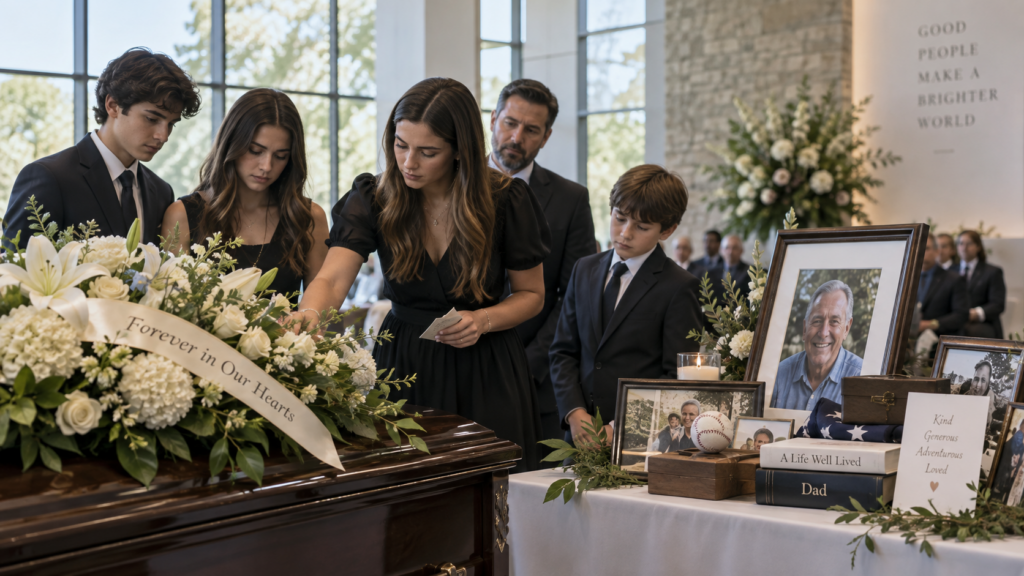
Another notable generational finding from NFDA research is that younger generations place more importance on viewing the deceased than might be expected.
Viewing can serve several purposes. It may help relatives acknowledge the reality of a death, create an opportunity for farewell, and provide a shared ritual for family and community members.
That does not mean every family wants an open-casket service. Preferences are highly personal and can be influenced by culture, religion, circumstances of death, and the wishes of the deceased.
Still, younger people’s interest in viewing suggests that convenience alone may not determine the future of funerals.
Traditional Burial Does Not Mean an Old-Fashioned Funeral
One of the most important distinctions is between disposition and memorialization.
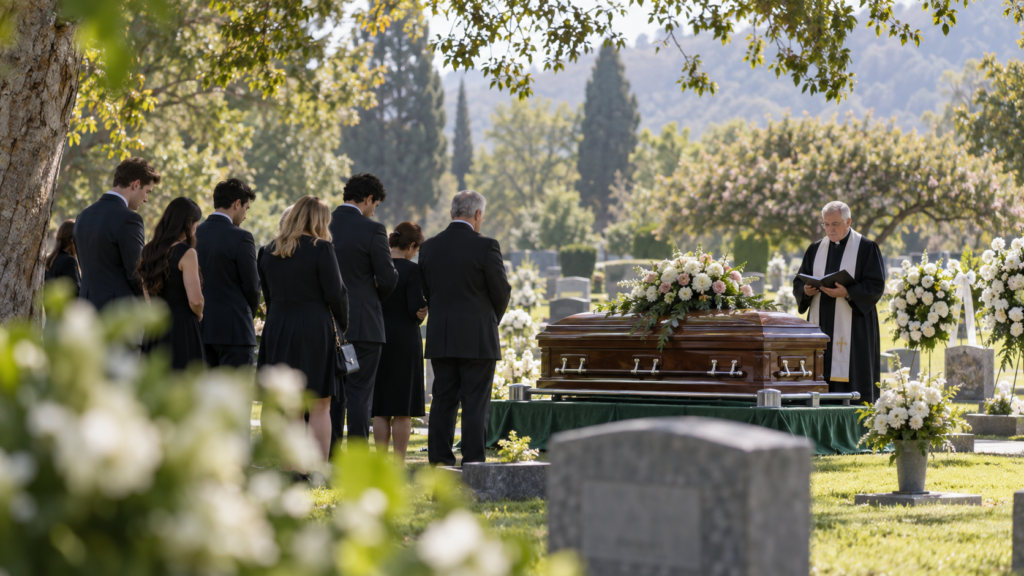
Choosing a casket burial does not require a family to reproduce every element of a funeral from decades ago. Younger adults can combine burial with highly personalized ceremonies.
A modern burial service might include:
- Personal playlists rather than traditional funeral music
- Video tributes and digital photo displays
- Informal clothing
- Celebrations at outdoor or non-traditional venues
- Livestreaming for distant relatives
- Online memorial pages
This flexibility may help explain why traditional burial and technological innovation do not have to compete with one another.
Gen Z Is Also Interested in Green Burial
The emerging picture becomes even more interesting when sustainability is considered.
The Wake Forest research found that Gen Z’s interest in traditional burial coexisted with interest in green burial. In other words, younger adults may appreciate the symbolism and physicality of burial while questioning conventional materials or practices.
The NFDA’s funeral industry statistics show broad consumer interest in environmentally friendly funeral options, reflecting a larger shift toward sustainable deathcare.
NewDeaths has explored this trend through articles on biodegradable memorial technology and memorial forests and living memorials.
A future Gen Z burial might therefore look very different from the stereotypical conventional funeral: an unembalmed body, biodegradable casket, conservation cemetery, personalized ceremony, and digital memorial could all exist together.
What About Embalming?
Interest in burial should not automatically be interpreted as enthusiasm for embalming.
The Wake Forest survey found much weaker overall interest in embalming than awareness of the practice. This distinction matters because consumers often associate casket burial, viewing, embalming, and traditional funerals as one package when they are actually separate decisions.
The FTC explains through its Funeral Rule consumer guidance that embalming is not necessarily required by law in every situation.
Future funeral preferences could therefore involve traditional-looking rituals combined with fewer conventional preparation practices.
Could Cost Change Gen Z’s Preferences?
Cost may ultimately be one of the biggest factors separating stated preferences from actual choices.
NFDA data shows that a funeral with burial generally costs more than one with cremation before certain cemetery expenses are included. Younger adults facing housing costs, student debt, childcare expenses, and limited savings may choose differently when they are responsible for actual arrangements.
This means today’s survey preferences should be treated as signals rather than guarantees.
Gen Z is also still young. Preferences may change with age, marriage, parenthood, religious participation, family experience, and financial circumstances.
What Funeral Homes Can Learn From Gen Z
The research nevertheless contains an important message for funeral professionals: younger customers should not be stereotyped as wanting the cheapest, fastest, or most digital option.
They may value:
- Clear explanations instead of industry jargon
- Personalization
- Environmental responsibility
- Transparent prices
- Meaningful physical rituals
- Digital access alongside human service
NFDA’s research has also found that younger consumers can find funeral terminology confusing. Clear communication may therefore be as important as introducing new technology.
The Future May Be More Diverse, Not Less Traditional
For years, deathcare trends were often described as a simple transition from burial to cremation. The newest generational research suggests the future may be more complicated.
Cremation is likely to remain a major part of American deathcare. At the same time, younger generations may preserve or reinvent traditions that analysts once expected to fade.
The result could be a funeral landscape where direct cremation, casket burial, green burial, water cremation, and human composting all coexist rather than one replacing every other option.
Conclusion
Gen Z funeral preferences are challenging assumptions about the future of deathcare. Despite decades of rising cremation rates, current research suggests younger adults may place unexpected value on casket burial, viewing, funeral professionals, and physical memorial rituals.
Whether those preferences persist as Gen Z ages remains unknown. What is already clear is that younger consumers are not simply abandoning tradition. They appear more interested in choosing which traditions still carry meaning, personalizing them, and combining them with sustainability and modern technology.